


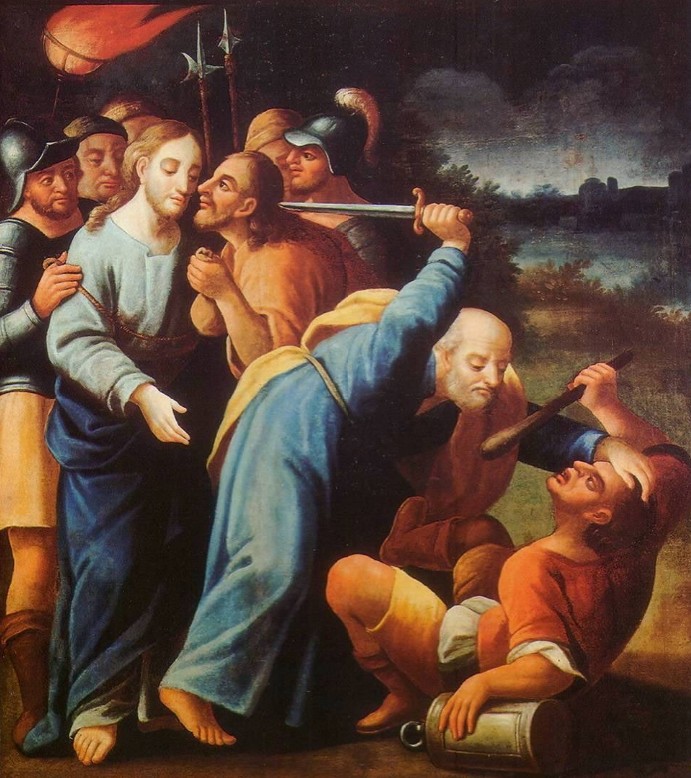
There are many (seemingly) casual facts in the Bible, scattered here and there, that, when put together, make a rational proof of its truth. For instance, on the night of Jesus’ arrest, one of his followers, Peter, brandished a sword and cut off the ear of the High Priest’s servant. This unhappy servant would surely be the perfect witness, you might think, in any law court to show that Jesus and his followers were anything but men of peace. Yet this evidence against Jesus was never produced. Why? Read on and find out.
With Jerusalem full of pilgrims gathered for the Feast of Passover, the priests, elders and scribes were anxious to try Jesus and sentence him before the festival began. A Council gathered (Mark 14:53) and many false witnesses were brought to testify against Jesus, but they could not agree on their stories (vs. 56 and 59). No doubt the Council felt frustrated; they had to convince Pontius Pilate, the Roman Governor under whose authority they came, that they had a good case against the itinerant preacher who was causing such a stir among the people.
Yet, earlier that evening on the Mount of Olives (Luke 22:39), as Jesus was being arrested (Mark 14:43, John 18:3-10), Peter had lashed out (presumably in fear) at the High Priest’s servant Malchus, and cut off his right ear. Of all the people Peter could have harmed, it happened to be someone from the High Priest’s own household! A gift, surely, for the men looking for evidence against the accused. This Jesus who tells his listening crowds to turn the other cheek if anyone slaps them (Matthew 5:39) and to love their enemies (Matthew 5:44) has a right-hand man who bears an offensive weapon and uses it viciously!
What a dramatic scene this would make in court: Malchus, wearing a huge bandage on his right ear, possibly with a doctor in attendance to testify to the severity and life-changing consequences of this injury. Who would need further witnesses? Instead, not a word about it is uttered. Why? What is behind the High Priest’s silence concerning his wounded servant?
Luke’s Gospel (and only Luke) has the answer. After the incident of Peter’s strike against Malchus:
‘Jesus said, “No more of this!” And he touched his ear and healed him’ (Luke 22:51).
In the dramatic silence that followed, we can imagine Malchus reaching uncertainly towards his severed ear to find it quite whole again, and perhaps wondering whether the attack had really happened. Only his stained garments assured him that it really had. The High Priest no longer had a ‘star witness’.
Yet none of this is spelled out in the gospels. We need to piece it together for ourselves from the four different accounts. Just those few words ‘and healed him’ change everything. Another example of how incidental phrases in the Bible can provide a complete and compelling story.
JOAN LEWIS
*Adapted from Undesigned Scriptural Coincidences by J J Blunt.