


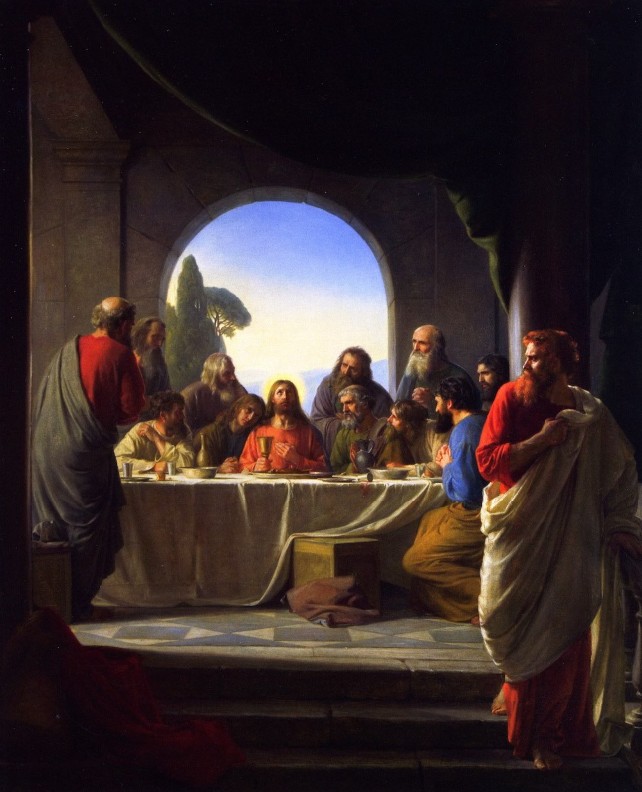
At the Last Supper, the meal which Jesus Christ shared with his disciples just before he was crucified, the atmosphere must have been really charged. All of those present knew that something was about to happen, but probably only two people knew exactly what that would be. Those two were the Lord Jesus and Judas Iscariot. By the time they reached the upper room where the meal was to be held, Judas had already agreed with the chief priests to betray Jesus, and was only waiting for the right moment (Luke 22:8–13). He could not do so until he had left the upper room, because Jesus had carefully made sure beforehand that only Peter and John knew where they would meet (v. 8).
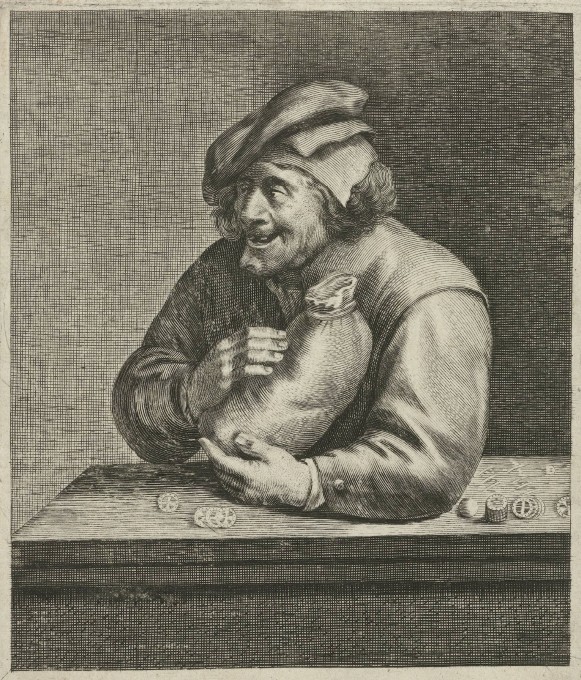
During the meal, Jesus washed the feet of all the disciples (John 13:1–12). Presumably this included Judas. This was not only a lesson in humility, it was also an appeal to Judas to think again. A little later, Jesus offered a mark of special favour to him. ‘Jesus answered, “It is he to whom I will give this morsel of bread when I have dipped it.” So when he had dipped the morsel, he gave it to Judas, the son of Simon Iscariot’ (v. 26). The morsel of bread dipped in the savoury sauce was a mark of special favour. Was Jesus making a final appeal to Judas not to commit the sin he had planned? If that was so, then it was not too late for Judas to repent, to change his mind.
After Judas had betrayed Jesus, he threw the fee he had received, 30 pieces of silver, back at the priests (Matthew 27:3–10). He could have done so earlier. Even Judas then was not too wicked for the Lord God to save, if only he had repented. It is the tragedy of Judas that he then took his own life, without doing so.
The Magician
Later in the New Testament there is an account of great wrongdoing which appears to be forgiven. Philip, one of the seven members of the congregation in Jerusalem who were appointed to look after the well-being of widows, went on a preaching trip to Samaria. It went well, and a number of people believed what he said. The disciples in Jerusalem asked two of the apostles, Peter and John, to go to Samaria to ensure that these new converts received the gift of the Holy Spirit.
One of the converts was a magician called Simon. He had had a wide following because of the tricks he was able to perform. (Even today magicians can have a huge audience.) Simon quickly realised that the power of the Holy Spirit enabled miracles which were much more impressive than his tricks, however convincing they were.
‘Now when Simon saw that the Spirit was given through the laying on of the apostles’ hands, he offered them money, saying, “Give me this power also, so that anyone on whom I lay my hands may receive the Holy Spirit”’ (Acts 8:18–19).
Peter rebuked him sharply: “May your silver perish with you, because you thought you could obtain the gift of God with money! You have neither part nor lot in this matter, for your heart is not right before God. Repent, therefore, of this wickedness of yours, and pray to the Lord that, if possible, the intent of your heart may be forgiven you. For I see that you are in the gall of bitterness and in the bond of iniquity” (vs. 20–23).
Simon’s reaction was impressive, and contrite: “Pray for me to the Lord, that nothing of what you have said may come upon me” (v. 24).
We are told nothing more about Simon, but presumably Peter did as he asked, so even this dreadful condemnation did not mean that Simon was beyond redemption. He could find forgiveness if he truly tried, and he appears to have done so.
Encouragement
These two incidents should encourage us. If we have been baptised and become a child of God, then whatever the sin we have committed, whatever awful black moments lie hidden in our past, or whatever awful things we might still do, the Bible teaches that it is always possible to be forgiven, if we repent. God’s principles are eternal, they do not change. So whatever the sin we may have committed, true repentance will produce forgiveness.
One of the psalms written by King David is very explicit about that. ‘I acknowledged my sin to you, and I did not cover my iniquity; I said, “I will confess my transgressions to the Lord”, and you forgave the iniquity of my sin. Therefore let everyone who is godly offer prayer to you at a time when you may be found; surely in the rush of great waters, they shall not reach him. You are a hiding place for me; you preserve me from trouble; you surround me with shouts of deliverance’ (Psalm 32:5–7).
This psalm was written after David had committed at least two dreadful sins. He had committed adultery with a woman who was married to one of his top rank soldiers, and had then had her husband murdered in an attempt to cover it up. Both sins would merit stoning under the Jewish Law of Moses, but David was forgiven by the Lord God because of his true repentance. It is true that he continued to suffer the consequences of his sin, but his sin was forgiven.
Another psalm which David wrote after his repentance and forgiveness is a poignant and moving prayer which any of us could use. ‘Wash me thoroughly from my iniquity, and cleanse me from my sin! For I know my transgressions, and my sin is ever before me. Against you, you only, have I sinned and done what is evil in your sight, so that you may be justified in your words and blameless in your judgement’ (Psalm 51:2–4).
The psalm continues, ‘For you will not delight in sacrifice, or I would give it; you will not be pleased with a burnt offering. The sacrifices of God are a broken spirit; a broken and contrite heart, O God, you will not despise’ (vs. 16–17). If it was true for David, it can be true for us also.

MARK SHEPPARD