


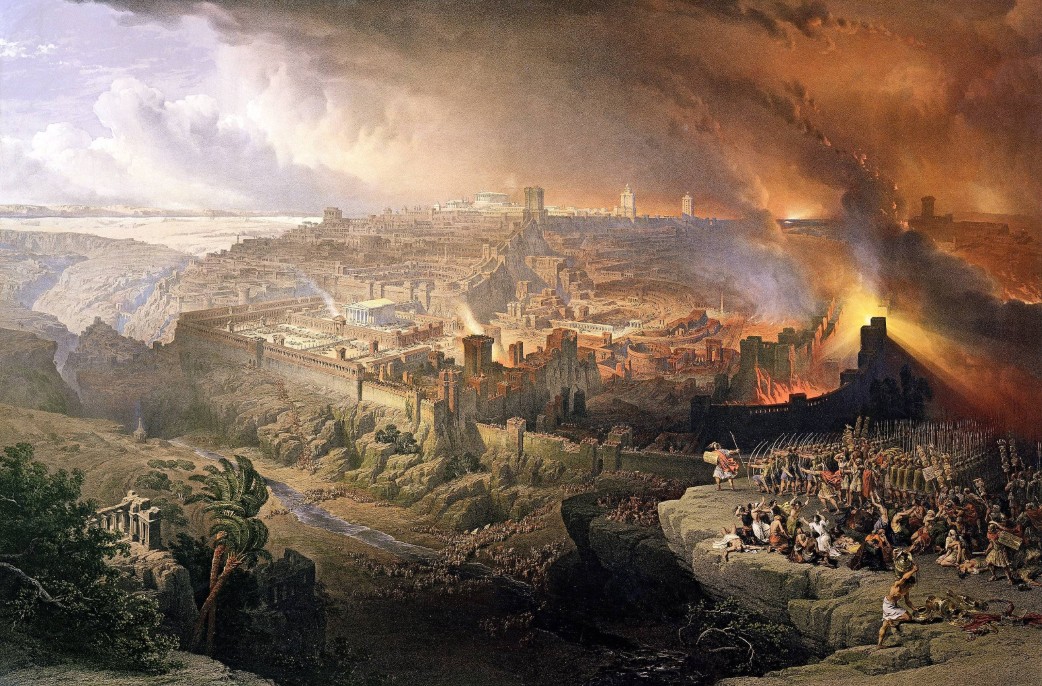
In a narrow channel, beneath Jerusalem’s Old City of David, two intact clay jars lay on their sides, wedged in mud. It was 2011, and Israeli archaeologists were exploring what was then a newly discovered tunnel close to the Temple Mount. The last thing they anticipated were signs of past human activity so deep below the old city streets.
The jars had all the appearance of being left there purposely and, amazingly, food fragments were still discernible inside. Yet why would anyone choose this dark, charmless venue to take their supper?
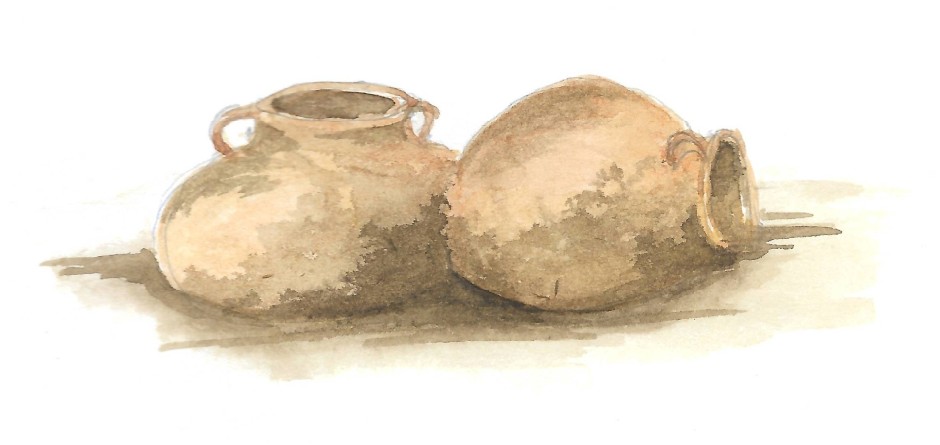
A clue comes in the history of Jerusalem itself. The Roman historian Josephus Flavius recorded the last days of Israel as a nation in the First Century ad, when Roman armies razed the Jerusalem temple to the ground (as foretold by Jesus Christ in Luke 21:20–24). Josephus himself witnessed the years leading up to the destruction of the temple and described in some detail how the Jews endured the final weeks, when Jerusalem was surrounded by Roman siege ramps, engines and battering rams.
On 24th July 70 ad, the armies of Titus, son of Emperor Vespasian, broke into the inner precincts of Jerusalem, breached the Antonia Fortress and destroyed the magnificent temple. Thousands of Jerusalem’s citizens had already died at Roman hands but a small group survived by going into hiding. They hoped that, if they were able to outlast the Roman presence, they could come out again after the enemy had left.
Unfortunately, the Romans were aware that some Jews were still present somewhere, and continued to seek them out. So the desperate fugitives escaped to the subterranean passages and sewers that ran beneath the city, hoping these might lead out to the desert. From there they might be able to reach Masada, the mountain-top fortress by the Dead Sea where some escapees had already found some sanctuary.
Despite the urgency, Jerusalem’s remaining defenders and citizens collected what sparse belongings they had, along with the last of their food that they carried in clay jars. Sadly, Josephus records that the Romans found them before they were able to escape through the tunnels.
“And when [the Romans] found where they were, they broke up the ground and slew all they met with. There were also found slain there above two thousand persons, partly by their own hands, and partly by one another, but chiefly destroyed by the famine.” *
What these 21st Century, Israeli archaeologists had come across was the very spot where desperate families, two millennia ago, had lost their lives.
Shortly after Titus’ destruction, the Emperor Hadrian expelled the Jewish population from their land entirely by brutally crushing a final revolt in 132–135 ad. He then used a ‘scorched earth’ policy that massacred hundreds of thousands, sold survivors into slavery, and banned the Jews’ religious practices. He issued an imperial decree banning all circumcised persons from entering or even looking upon the territory under pain of death. To add the final insult and erase all Jewish ties to the land, Hadrian renamed Jerusalem Aelia Capitolina, and changed the province’s name to Syria Palaestina. So the Jews were expelled from the home that had been theirs for nearly 1500 years (Joshua 1, 10:40), and remained in exile for almost another two millennia. Subsequently Jews have been renowned for finding homes across the globe.
But in May 1948 the modern state of Israel was re-established. Under the 1950 ‘Law of Return’ anyone with at least one Jewish grandparent, together with their spouse, has been able to obtain citizenship of the modern state of Israel. Since its establishment, 3.3 million Jews have arrived. Currently between 20,000 and 30,000 immigrate there annually, just as God had promised:
‘I will take you from the nations and gather you from all the countries and bring you into your own land’
(Ezekiel 36:24).
‘Thus says the Lord God: Behold, I will take the people of Israel from the nations among which they have gone, and will gather them from all around, and bring them to their own land’ (Ezekiel 37:21).
That poignant moment in an unexciting drainage channel confirmed two amazing facts. One—that the dispossessed First Century Jewish people did not entirely perish as the Romans had intended, their clay pots symbolising the hope that they would survive. And two—those who found the vessels were themselves living proof that God had indeed kept His word and returned His people to their land.
JOAN LEWIS
*Adapted from When the Stones Speak by Doron Spielman.