


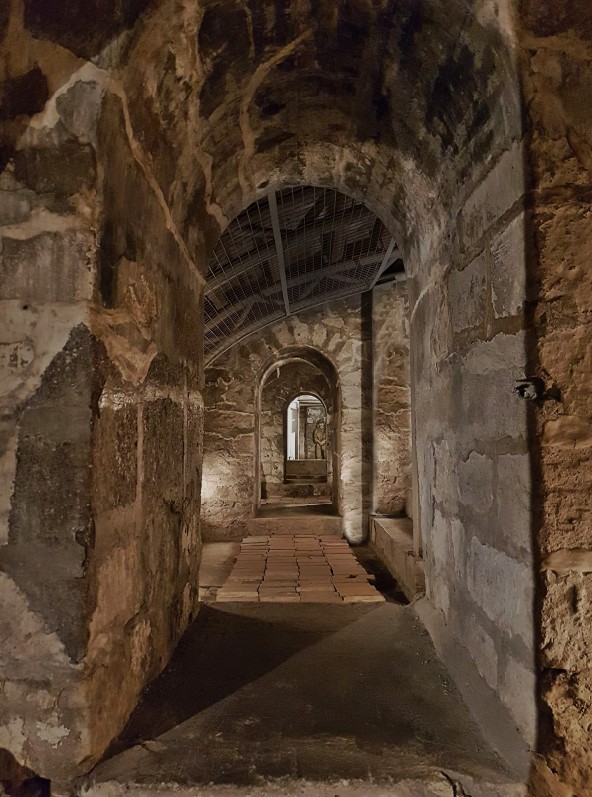
Have you ever been in a prison? It is an experience you do not forget. We can only imagine what the Egyptian dungeon was like in which Joseph found himself.
He was fitted with iron manacles that bit deep, red sores into his flesh (Psalm 105:18), and the endless hours crept past him like years. He did not even have the comfort of knowing that when he had served his time, he would be free. He was in for life, and no one cared—he was only a slave.
A lesser man would have pined away in frustration and bitterness at the injustice he had suffered. But Joseph still believed in God, and somehow saw light in his darkness. As a young lad he had been shown in a dream that one day his father and brothers would bow down to him (Genesis 37:7). This unfulfilled promise gave him hope that one day he would see them again. Nevertheless, the waiting tried his faith to the uttermost.
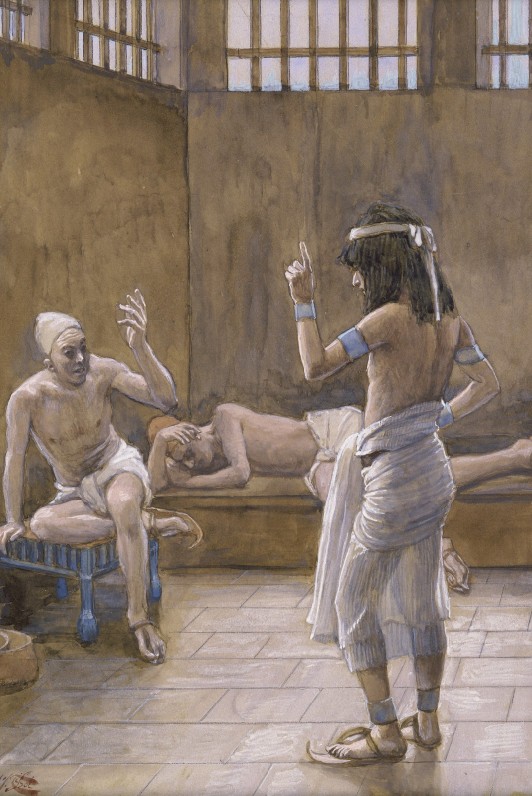
There was one incident, shortly after his imprisonment began, that set his heart leaping with excitement. Two prisoners joined him—courtiers who had been disgraced (Genesis 40). Both men were troubled by highly unusual dreams. With his gift for understanding the meaning of dreams, Joseph predicted that one of the two, the king’s chief butler, would soon be restored to office. Joseph begged the man to put in a kind word for him when this happened, and to persuade the authorities to have him set free. When his interpretation came true, and the butler was called back to his post, Joseph waited expectantly for the messenger that would bring the vital warrant for his release. Nothing happened. Eventually he realised bitterly that he had been forgotten. It was to be two whole years more before opportunity knocked again.
Another Kind of Prison
It is worth a thought, this agony of waiting in prison for someone to deliver you from a life sentence. What Joseph endured so literally, we all suffer, considered from another point of view. Being shut up in prison is a common picture the Bible uses for our enslavement to sin. We serve self too well, and God too little, and so end up under sentence of sliding from youth and health, through a miserable waning of our powers, to everlasting death. We are like convicts, sitting chained up in rows, with no power to get rid of our manacles.
For us, though, there can be deliverance. A saviour has come searching for us to let us out. He has killed the powerful enemy that held us enthralled, and made us free again. But the price of victory was his own blood. Look at these passages, which paint the picture so clearly for us. First, Isaiah:‘The Spirit of the Lord God is upon me, because the Lord has anointed me to bring good news to the poor; he has sent me to bind up the broken-hearted, to proclaim liberty to the captives, and the opening of the prison to those who are bound’ (Isaiah 61:1).
These words were quoted by Jesus, and applied to himself, in the synagogue at Nazareth (Luke 4:18). He was the great deliverer, setting people free from sin.
Now we have the prophet Zechariah: ‘Rejoice greatly, O daughter of Zion! Shout aloud, O daughter of Jerusalem! Behold, your king is coming to you; righteous and having salvation is he, humble and mounted on a donkey, on a colt, the foal of a donkey’ (Zechariah 9:9). These words were fulfilled when Jesus rode into the city on a donkey’s foal, six days before his crucifixion.
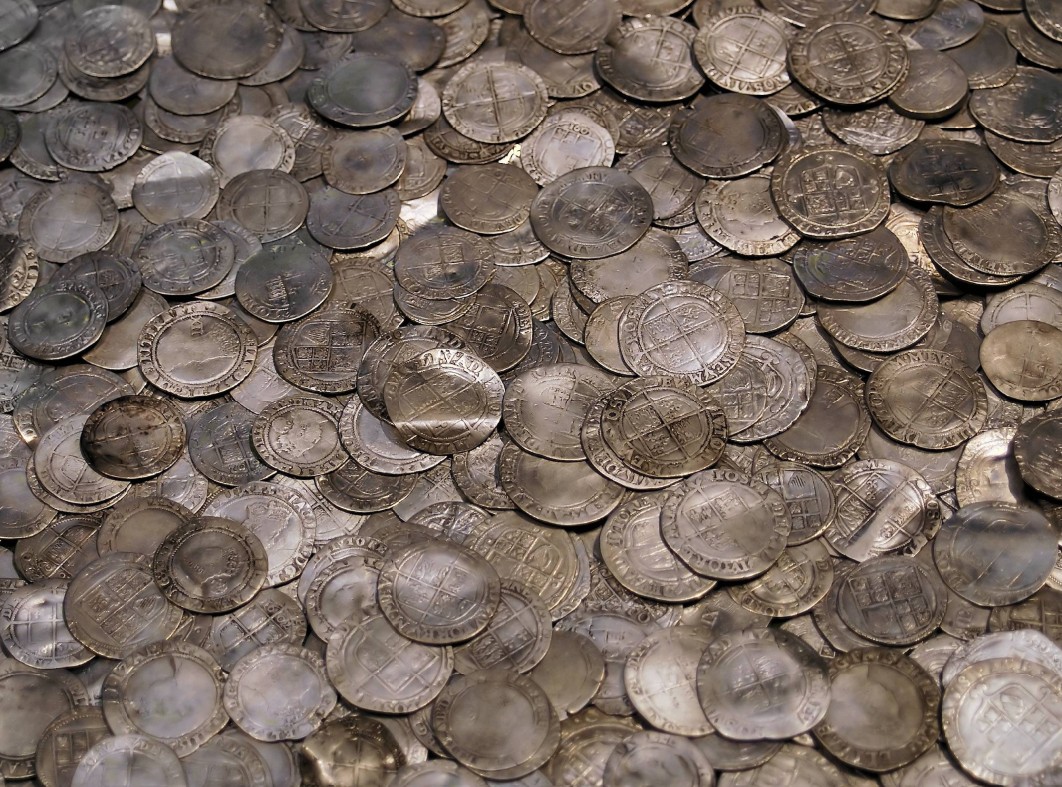
But see how the prophet continues: ‘As for you also, because of the blood of my covenant with you, I will set your prisoners free from the waterless pit’ (v. 11). It was Jesus’ blood, “my blood of the covenant” as he called it (Matthew 26:28), that has made it possible for us to be raised from the waterless pit of the grave. Did you notice a connection in those words with Joseph? It was a waterless pit in the wilderness where Joseph was left to die (Genesis 37:24). But the silver coins for which he was sold, enabled him to come out (v. 28). Jesus’ blood is the price of our redemption.
Deliverance
Here is another passage, from the book of Hebrews. Speaking again about Jesus, it says, ‘Since therefore the children share in flesh and blood, he himself likewise partook of the same things, that through death he might destroy the one who has the power of death, that is, the devil, and deliver all those who through fear of death were subject to lifelong slavery’ (Hebrews 2:14–15).
And lastly Jesus himself declares, “I died, and behold I am alive for evermore, and I have the keys of Death and Hades” (Revelation 1:18). Those keys can open for us the prison house of death, and bring us everlasting life and joy.
If you have not yet decided to put on the name of Jesus, consider your position carefully. He wants to set us free from sin and death, and unless we let him into our hearts and lives, we will remain enslaved to sin, and eventually death.
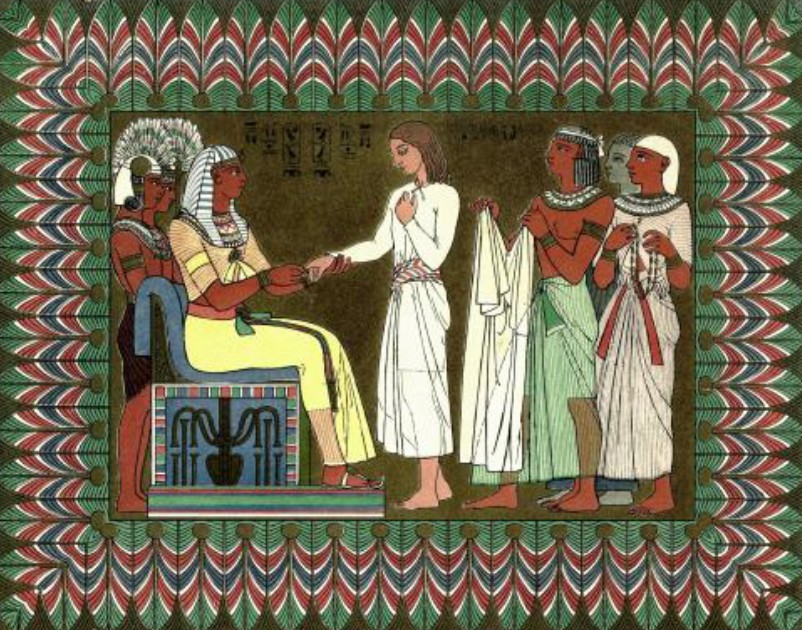
For Joseph, deliverance came suddenly. One day, without warning, a messenger from the king hammered on the prison gate demanding to see the Hebrew slave who could understand dreams. Joseph was rapidly identified and let out of his cell. ‘Then Pharaoh sent and called Joseph, and they quickly brought him out of the pit. And when he had shaved himself and changed his clothes, he came in before Pharaoh’ (Genesis 41:14).
What a reversal of fortune, to be taken in one hour from the squalor and misery of captivity to the dazzling splendour of the palace, where the king smiles upon him and rich courtiers turn green with envy at the attention he attracts from their imperious master. The sequence of events was quite simple. Pharaoh himself had had a strange and clearly prophetic dream. No one he asked could interpret it. The chief butler suddenly remembered how Joseph had explained the meaning of his own dream, two years before, and recommended him to the king. So Joseph was presented with the chance of a lifetime, and all eyes were fastened upon him.
He must have wondered if he were dreaming himself! Calmly he told the great man that he did not claim the credit for his powers himself. “It is not in me,” he said, “God will give Pharaoh a favourable answer” (Genesis 41:16). So it was that the God of Abraham came to be preached in the court of Egypt by this intrepid saint, who stood there in the heart of a civilisation wholly given to the worship of man-made gods and goddesses, and told them that his God was in control of the world.
Faithfulness and Integrity
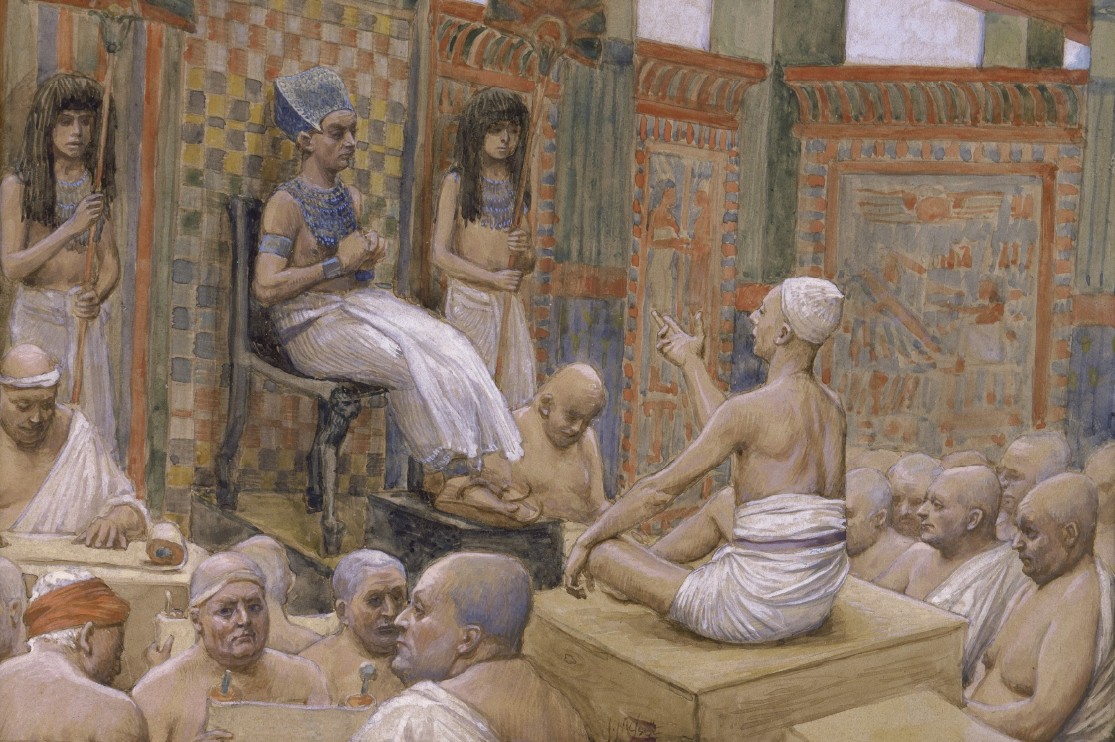
After what he had been through, Joseph might well have turned against religion altogether. Certainly if we had been in his shoes, we should hardly have felt it expedient to try to convert Pharaoh to our beliefs at such a critical juncture in our career. We should probably have made the maximum capital for ourselves, and left God out of the picture until later. But Joseph was a man of integrity and courage, and suffering had taught him not to fear men. Coolly he dissected the king’s vision, and told him that Joseph’s God was sending upon Egypt seven years of record harvests, to be followed by seven ghastly years of famine. He advised the king to appoint a man to organise a storage programme during the good years, so that the surplus crops from this period could be reserved for the lean years that would inevitably follow.
The masterly way in which he spoke, and his obvious wisdom, impressed the king. To his amazement, Joseph found he had talked himself into the job. “Since God has shown you all this,” decreed Pharaoh, “there is none so discerning and wise as you are… See, I have set you over all the land of Egypt” (vs. 39–41).
So it was that at the age of 30 Joseph found himself elevated from the dungeon to the office of President of Egypt, second only to Pharaoh himself. With his usual efficiency, he set himself to administer the great seven-year plan, and as the record harvests began on schedule, the name of the God of Abraham was exalted throughout the land.
The reward of Joseph’s faith is a lesson we do well to heed in these days when humanity’s power seems to go almost unchallenged. God is able to turn the tables overnight, and dramatically, when the lives of His servants are involved. Like Joseph, Jesus himself, once despised and rejected by men, will return suddenly to the scene of his sufferings, as a mighty ruler to organise the world into the kingdom of God (Acts 1:11). As Isaiah wrote, ‘It was the will of the Lord to crush him; he has put him to grief… he shall see his offspring; he shall prolong his days… Therefore I will divide him a portion with the many, and he shall divide the spoil with the strong’ (Isaiah 53:10–12). We can share with him in this great work. But it all depends on our having Joseph’s steadfast faith today.
DAVID PEARCE
(to be continued)