


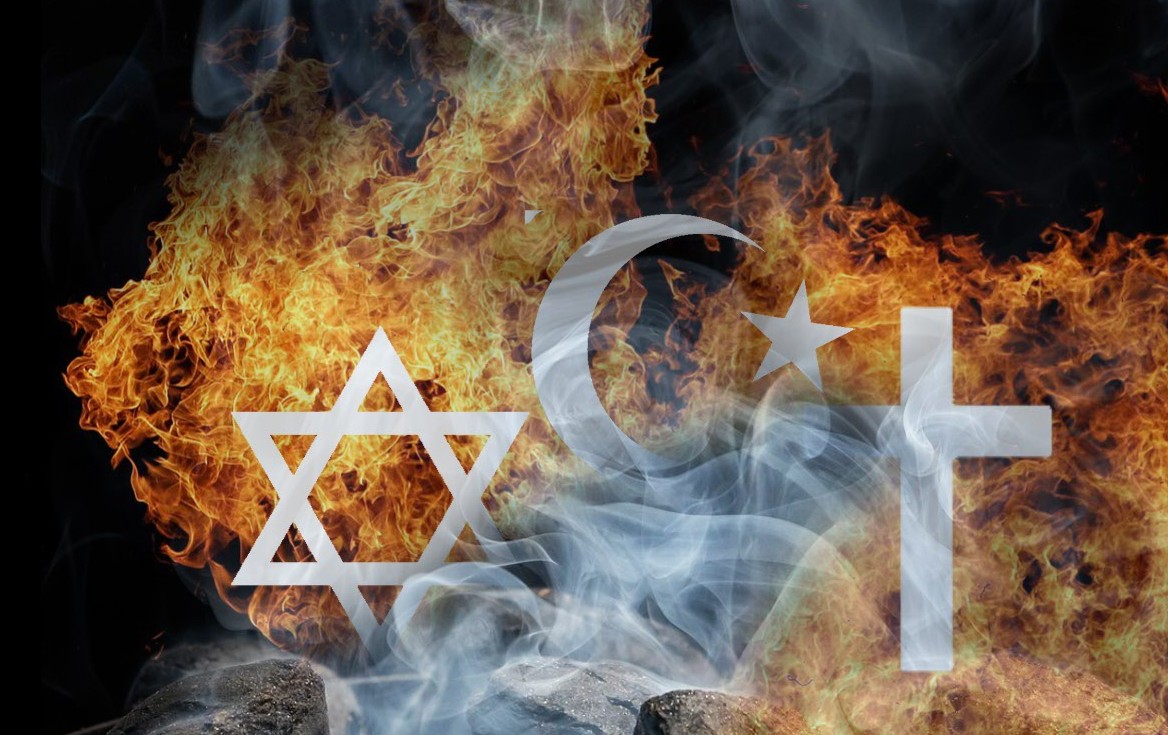
I knew a man who refused to talk about religion. In his opinion, religion causes intolerance and strife and the human race would be better off without it. Have you heard people say that?
Certainly it is true that religion has been a major cause of conflict throughout history, and it still is. Some would argue that the most potent threat to world peace at the moment is militant Islam. I can’t comment on Islam’s relationship with violence (you would need to ask a Muslim).
But I can comment on Christianity’s relationship with violence. It has to be admitted that the history of the Christian churches has been marred by appalling inhumanity. From the Crusades in the Middle Ages to the Spanish Inquisition, to pogroms against Jews, to the Irish Troubles, it’s been estimated that as many as three million people have died in persecutions and conflicts caused by Christianity.*
My comment is simple. Jesus Christ was a man of peace, and he commanded his followers to be the same: “I say to you, Do not resist the one who is evil. But if anyone slaps you on the right cheek, turn to him the other also” (Matthew 5:39).
When he was facing execution, he said, “My kingdom is not of this world. If my kingdom were of this world, my servants would have been fighting, that I might not be delivered over to the Jews. But my kingdom is not from the world” (John 18:36).
His followers preached the same message of non-aggression: ‘Repay no one evil for evil, but give thought to do what is honourable in the sight of all. If possible, so far as it depends on you, live peaceably with all. Beloved, never avenge yourselves, but leave it to the wrath of God, for it is written, “Vengeance is mine, I will repay, says the Lord”’ (Romans 12:17–19).
Anyone who practises violence in the name of Christ is not his follower. Christ is not responsible for the atrocities that have been carried out in his name.
And it’s worth exploring the question of whether the world really would be a more harmonious place if there was no religion. That is also a question with a simple answer. The 20th Century was a period of social change, marked in many areas of the world by a decline in religion and the rise of atheist, humanistic philosophies. It was also a period of war and calamity unprecedented in world history. It’s been estimated that around 100 million people died in wars, persecutions, purges, exterminations and famines which were a direct result of the atheist ideologies of Nazism and Communism.*
It’s obvious then that conflict is caused by people. People will use religion, for example Christianity, because it can provide a convenient pretext and because it can arouse strong feelings—but it is not the problem. Human nature is the problem.
So what is the solution?
In 1971 the musician John Lennon released his iconic song Imagine, in which he outlined his agenda for world peace:
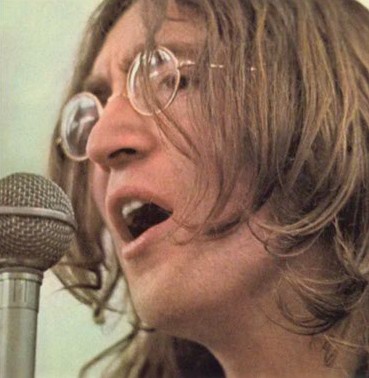
“Imagine all the people, living for today… Nothing to kill or die for, and no religion, too. Imagine all the people, living life in peace…”
The 1970s was a time of optimism and faith in the power of humanity to build utopia. Many people were inspired by Lennon’s vision. But looking back now, those airy words seem hollow. It becomes increasingly apparent that human nature is just not capable of existing without conflict.
And that’s why true religion does hold the answer—specifically, the teachings of the Bible. It explains clearly and simply that human nature is flawed (Genesis 3). It shows that there is a God, Who offers to save people from their human nature (John 3:16). It shares the promise that world peace and justice will one day be realised—not by human efforts, but in the Kingdom which will be imposed upon the world by God (Daniel 2:44). And it contains the invitation for you and me to be there: “This is the will of my Father, that everyone who looks on the Son and believes in him should have eternal life, and I will raise him up on the last day” (John 6:40).
* What If Jesus Had Never Been Born? (D J Kennedy and J Newcombe, 1994)