


‘Praise is due to you, O God, in Zion,
and to you shall vows be performed.
O you who hear prayer,
to you shall all flesh come.’
(Psalm 65:1–2)
In establishing the principle that ‘all things should be done decently and in order’ in the First Century Christian congregations (1 Corinthians 14:40), the Apostle Paul uses musical instruments as examples. He writes, ‘If even lifeless instruments, such as the flute or the harp, do not give distinct notes, how will anyone know what is played? And if the bugle gives an indistinct sound, who will get ready for battle?’
(vs. 7–8). We can infer that even the music played must be harmonious, with wind and brass instruments in tune with the strings for the melodies to be understood and appreciated. When there is music in communal worship, it must accompany the singers and not be a virtuoso performance!
Lessons from Job
In the book which bears his name, Job was challenged regarding his whereabouts at the creation of the universe. God said that at that time “the morning stars sang together and all the sons of God shouted for joy” (Job 38:7). We are being told the angels of God engaged in singing to celebrate the beginning of time and the purpose of God, by praise and worship. It must have been an occasion of great joy and pleasure to see the physical creation come into being by the word of God (Genesis 1). Whether the angels knew the earth would be inhabited by human beings is not revealed, but the race was to glorify God by its worship and praise.
By the time God had finished His speech, Job found it all too much and was overwhelmed by the magnificence of what he had heard about God’s power and wisdom. He said later, “I had heard of you by the hearing of the ear, but now my eye sees you” (Job 42:5). He now understood the holiness of God.
David’s Vision

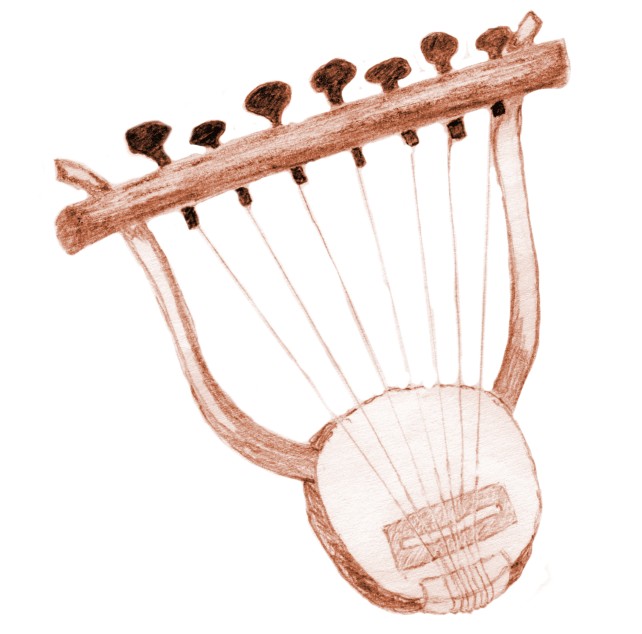
When Samuel the prophet and the future king David prepared for the building of the temple in Jerusalem, they ensured that singing and musical accompaniment would be a major part of the people’s worship. The appointed leaders of the choirs and orchestras were all accomplished players, capable of providing leadership in the required skills. Asaph was the chief,and he conducted and beat time with cymbals; others played psalteries (stringed instruments either plucked or played with a bow), and harps, and priests contributed with trumpets. David ordered that “4,000 shall offer praises to the Lord with the instruments that I have made for praise” (1 Chronicles 23:5). It is possible these instruments included lyres and harps, which were also stringed.
David was also concerned about the singing, and particularly the words. They were to be suitable for the worship of God and needed to fit with all the sacrifices offered in the temple court. He wrote many Psalms for temple worship, and Psalms 95 to 100 contain references to singing or praise. For example:
‘Oh come, let us sing to the Lord;
let us make a joyful noise to the rock of our salvation!
Let us come into his presence with thanksgiving;
let us make a joyful noise to him with songs of praise!…
Oh come, let us worship and bow down;
let us kneel before the Lord, our Maker!’
(Psalm 95:1–2, 6)

After the Exile
Many years later the nation had fallen away from God. The Babylonians destroyed Jerusalem and carried the Jews away captive. But eventually they returned from exile, and the books of Ezra and Nehemiah describe how they rebuilt the temple and the city. Some 550 years after King David’s appointment of Asaph to lead the worship, Nehemiah chose Asaph’s descendants to take charge of the music and accompany the spiritual revival of the nation. They had maintained their integrity and constancy, being encouraged by God’s prophets.
In Jerusalem the dedication of the walls was celebrated by two choirs, one led by Ezra and the other by the family of Asaph, marching around the walls in opposite directions, until they met when they turned into the city (Nehemiah 12:27–43). Their joyful singing was heard a long way off and Godly praise sounded in Jerusalem once again.
In the Life of Jesus
At the beginning and the end of the mortal life of Jesus, there was singing. At his birth, rejoicing and praise; at the end the singing of a psalm. The two occasions could hardly be more different, yet both were an integral part of God’s greater purpose of salvation.
At Jesus’ birth the angels sang. An angel appeared to shepherds outside Bethlehem, and ‘suddenly there was with the angel a multitude of the heavenly host praising God and saying, “Glory to God in the highest, and on earth peace among those with whom he is pleased!”’ (Luke 2:13–14). The angel knew that the child just born of the virgin Mary was at the heart of God’s plan of salvation, foretold in the promises made to the patriarchs of Israel, and by the Hebrew prophets. God was praised and glorified because this birth was evidence that He was still working in human affairs, and would ensure His purpose would be fulfilled.
At the end of his ministry, on the night before his crucifixion, Jesus shared his ‘last supper’ with his disciples in an upper room in Jerusalem. Then he and the disciples sang a hymn. Both Matthew and Mark record the occasion in precisely the same words. They write, ‘And when they had sung a hymn, they went out to the Mount of Olives’ (Matthew 26:30, Mark 14:26). This being the Jewish Passover, the hymn was probably one of the ‘Hallel Psalms’, which are in our Bibles as Psalms 113–118. They are psalms of praise, and the Jews associated them with Passover (Psalm 114 concerns Israel’s deliverance from Egypt).
In the Young Churches
Early in the Acts of the Apostles we learn about the general arrangements of the first Christian congregations, and how they conducted themselves. ‘And they devoted themselves to the apostles’ teaching and the fellowship, to the breaking of bread and the prayers’ (Acts 2:42). Undoubtedly, the believers engaged in singing, as the Jews were used to this in their services.
When the Apostles Paul and Silas were imprisoned in Philippi, it is recorded that ‘about midnight Paul and Silas were prayingand Silas were praying and singing hymns to God, and the prisoners were listening to them’ (Acts 16:25). Their singing possibly had an unexpected benefit, as some may have been converted to the truth of God’s word, then baptised into Christ, and so the Philippian church was founded.

Paul urged the believers in Ephesus to be ‘addressing one another in psalms and hymns and spiritual songs, singing and making melody to the Lord with your heart’ (Ephesians 5:19); and he told the Colossians, ‘Let the word of Christ dwell in you richly, teaching and admonishing one another in all wisdom, singing psalms and hymns and spiritual songs, with thankfulness in your hearts to God’
(Colossians 3:16).
The words of the hymns they sang were important as they were a method of teaching their beliefs. The things believed were declared by the hymns they sang. As well as being a means to praise and worship God, the hymns would encourage the believers in Godly living and reinforce the Gospel truths.
VIC AUCOTT
(to be continued)