


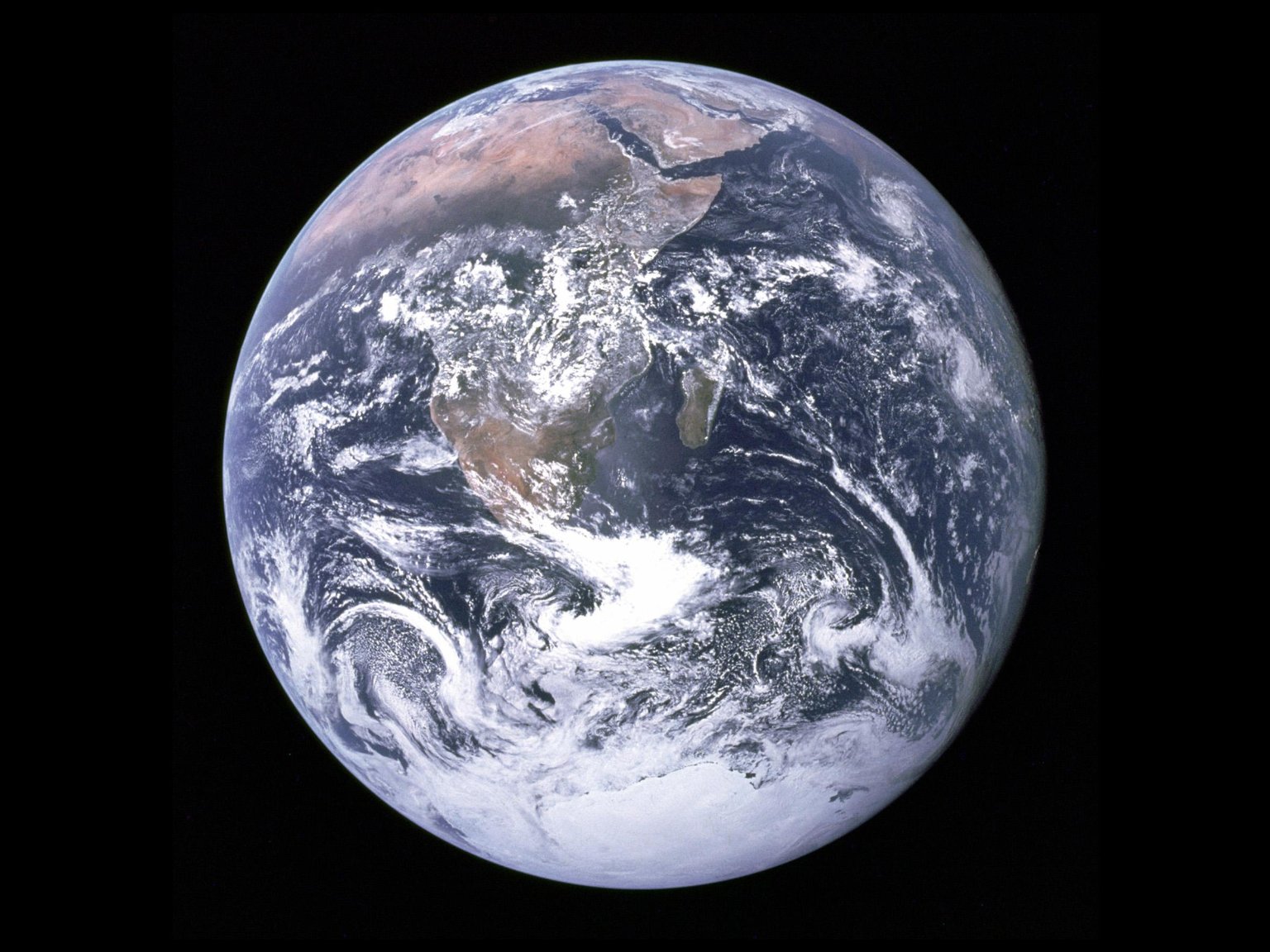
“Honestly, what struck me wasn’t necessarily just Earth, it was all the blackness around it. Earth was just this lifeboat hanging undisturbedly in the universe.”
Back home, after her historic journey to the far side of the Moon, this is how Artemis II crewmember Christina Koch reflected on the view of planet Earth from afar. She’s not the first to highlight Earth’s uniqueness amongst the other planets in our solar system or even in this universe. Just look at the individual planets that form a necklace round the Sun and you soon appreciate that amongst those bleak inhospitable globes, only one sparkles with life; a shining marble of vibrant blue oceans, white protecting clouds and myriad shades of green.
This Earth, the third planet from the Sun, has been described as the ‘perfect place’ for life owing to its precise location in the solar system’s ‘habitable’(or ‘Goldilocks’) zone. This favourable position means it has liquid water, a moderate atmosphere and doesn’t experience the cosmic hazards other planets do. Earth’s atmosphere means there is the right pressure and gases to sustain life while reducing the danger from meteoroids and harmful solar radiation. Furthermore, the Moon helps to stabilise this planet’s orbital tilt so that we do not suffer extremes of climate. One astronomer, describing this ideal positioning, exclaimed: “When it comes to our earth, we really hit the jackpot!” So are we just lucky, an aberration in an otherwise chaotic, unplanned universe? Or is there another explanation? The Bible’s opening words are:
‘In the beginning God created the heavens and the earth. The earth was without form, and void; and darkness was on the face of the deep’ (Genesis 1:1-2). This tells us that at one time the Earth was as ‘void’ as our neighbouring planets. Then, ‘the Spirit of God was hovering over the face of the waters. [And] God said, “Let there be light”; and there was light’ (v3). And so it continued, leading up to the creation of humans.
Yes, God formed the earth to be inhabited (Isaiah 45:18) and His ultimate plan is to see men and women reflecting His glory:
‘All the earth … filled with the glory of the LORD’ (Numbers 14:21).
To enable that to happen, God provided humankind with the guidance they need to achieve this. First, the Bible, the blueprint for life, then the Lord Jesus, God’s Son, who did his Father’s will and showed us how to live. His coming was another expression of the light that God first shed on to the Earth at creation, for Jesus said:
“I have come as a light into the world, that whoever believes in me should not abide in darkness” (John 12:46).
So not only did God give us the world, He gave us the perfect example of how He wants us to live in it.
From a distance the Earth as we know it looks beautiful, a lifeboat indeed amongst barren planets, but it does not save its inhabitants from disease, war, corruption, misery or death. Only when its true king, Jesus, returns and rules (Acts 1:10-11, Psalm 2:6-8) will it be the true ‘lifeboat’, inhabited by those committed to God’s ways and where its present troubles are replaced with wholeness, peace, honesty, happiness and eternal life (Revelation 21:1-6, 22-27).
Joan Lewis