


If somebody is not telling the truth they’ll usually make sure their story hangs together perfectly and sounds feasible to the listener.
On the other hand, a genuine person gives straight facts and leaves it there. They’ll describe an event just as they remember it, (sometimes omitting the small details that listeners need for it to make complete sense). Occasionally, it’s an ‘off-the-cuff’ detail that turns an otherwise baffling story into an understandable one. That is exactly what we have in a passage from Matthew’s gospel that seems puzzling at first.
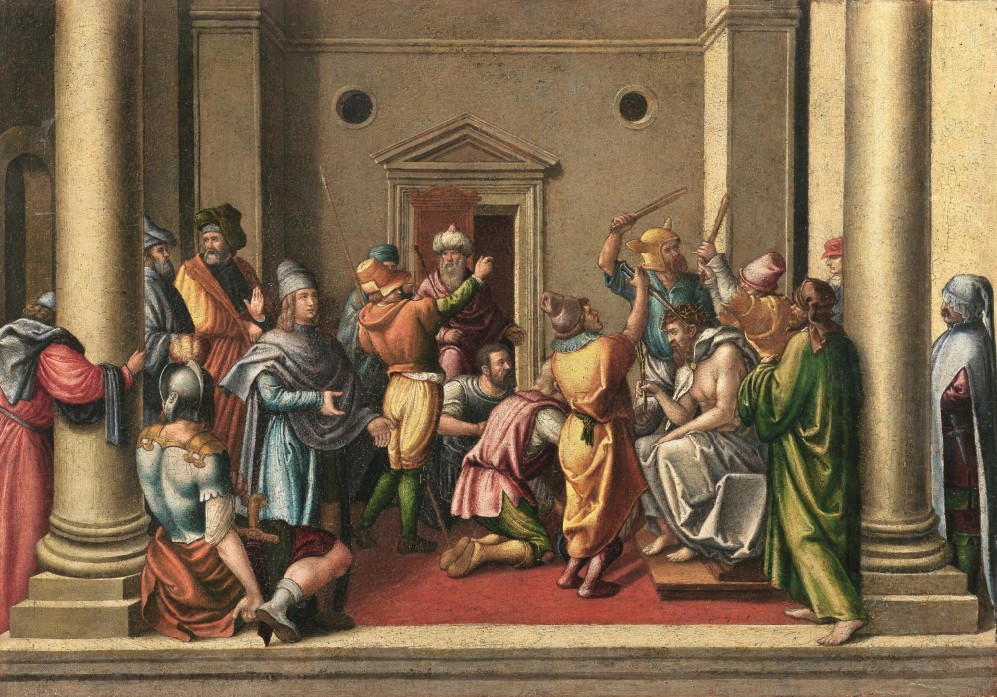
During Jesus’ trials he was abused by his captors: ‘Then they spat in his face and struck him. And some slapped him, saying, “Prophesy to us, you Christ! Who is it that struck you?”’ (Matthew 26:67–68).
Since they were so close, Jesus would have easily seen who it was, so what was the point of the question? He wouldn’t need to ‘prophesy’.
Yet Matthew tells us no more, simply that those mocking Jesus made what appears a pointless demand. But when we come to Luke’s account of the same incident we get the answer: ‘Now the men who were holding Jesus in custody were mocking him as they beat him. They also blindfolded him and kept asking him, “Prophesy! Who is it that struck you?”’ (Luke 22:63–64).
Now it makes sense; blindfolded, Jesus would not know who hit him.
Here is one of many small proofs of the truth of the Bible. Perhaps when Matthew wrote his gospel it was well known that Jesus was blindfolded so there was no need to mention it. Whether that is the case or not, we see that he was confident in what he wrote about. He didn’t go over his story with a toothcomb to make it sound ‘credible’: he just told it as it was. Luke filled in the gap for us.
JOAN LEWIS
Adapted from Undesigned Scriptural Coincidences by J J Blunt.