


(In the Beginning – Part 25)
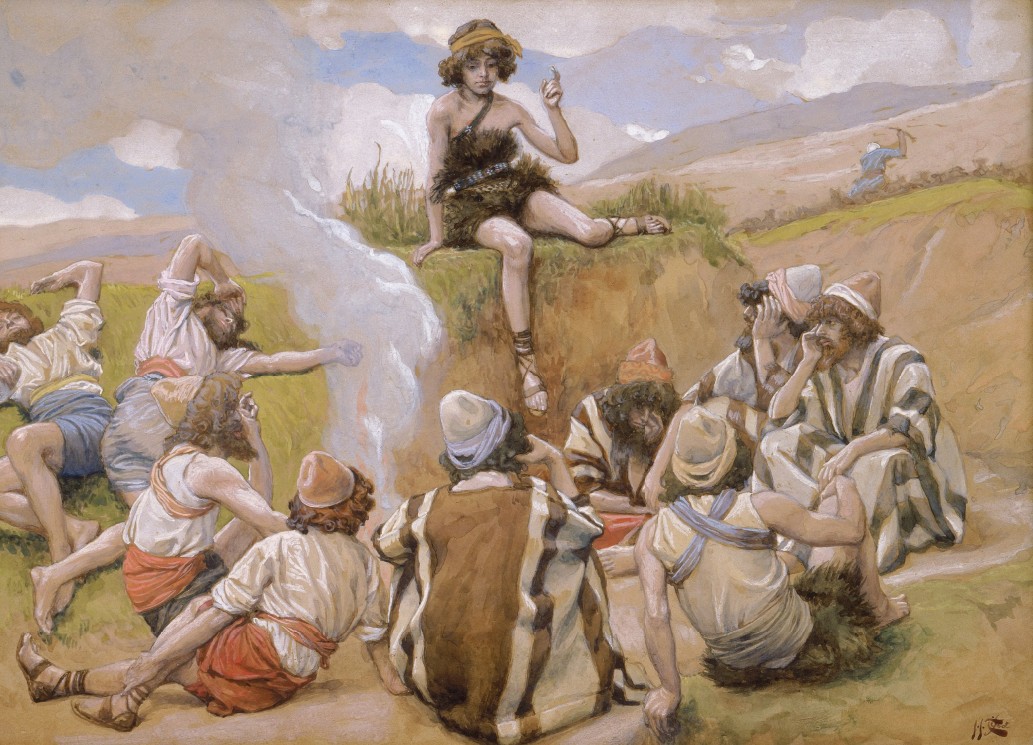
We come now in the narrative to the adventures of Joseph, Jacob’s son. Rachel had been late starting a family and had died while bearing Benjamin, her second son. Joseph, her firstborn, was therefore much younger than his ten half-brothers—the sons of Jacob’s other wife Leah, and his two concubines. It is likely that both in looks and temperament, Joseph reminded Jacob of Rachel. He became his father’s favourite. Perhaps Jacob spent more time teaching young Joseph about the God of his fathers, and His laws and commandments. He certainly turned out a much more God-fearing person than the other members of the family. At any rate, his character, his place in the affections of their father, and the fact that he was the son of another mother, created a widening gap between Joseph and his brothers.
The Dreamer
One day, Joseph had a dream. It was one of those occasions we meet in the Bible where God revealed His will to chosen men by a special vision in the night. We read later, for example, of Pharaoh, Nebuchadnezzar, Joseph the husband of Mary, and the Apostle Paul, all having such visitations. Interestingly, the phenomenon is referred to in the book of Job thus: ‘God speaks… in a dream, in a vision of the night, when deep sleep falls on men’ (Job 33:14–15).
Joseph’s dreams are recounted in Genesis 37. The message was striking, and it was repeated. In his first dream, sheaves of corn gathered by his brothers gathered round his own sheaf and bowed down. In his second, the sun, moon and eleven stars bowed down to him. His brothers instinctively read into the dreams a prophecy that they would become his servants, a fact which increased their antagonism towards him. Even his father thought he was getting grand ideas and reproved him. We shall return to the significance of Joseph’s dreams. Their immediate effect was to bring about a dramatic change in his life, with far-reaching consequences.
Shortly afterwards, Joseph was sent by his father to find his brothers, who were away from home finding pasture for the sheep, and bring back news of their welfare (v. 14). Joseph wore a costly and brightly coloured coat given him by his doting father (v. 3)—another mark of favour—and they recognised him some distance away. Their hatred welled up, and they decided to kill him, to make an end of his fine dreams. When he came close, they seized him, tore off his robe, and threw him into a deep, dry wilderness pit.
Facing Death
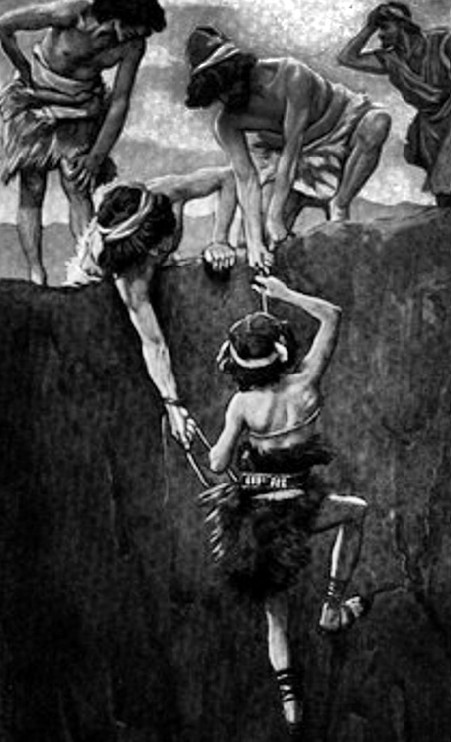
It is difficult to imagine, unless you have been through such a trauma, the feelings of Joseph as his brothers retreated from the edge of the pit and left him to die. He was only 17 years old (v. 2). Minutes before, he had been a privileged young man, just entering his father’s business, and likely to inherit a fortune in due course. Now his future was cut off by sandy walls he could not climb, and the searing eastern sun. His frenzied screams brought no reply from the empty wilderness, and he knew there was no chance of a search party finding him before he died of thirst. Joseph was numb with shock and fear. Perhaps in calmer moments he prayed to the God of his father, but nothing happened. Eventually, he lay still, waiting for the end.
If you have been through a life-threatening experience, you will know the sick feelings of despair, the wild thoughts, and the pressing awareness of the precarious thread on which life hangs. Such situations force us to view life in a sharper perspective, and if we are permitted to survive, teach us a new gratitude.
Joseph leaped to his feet, his heart pounding. Craning his tear-stained face towards the patch of sky above him, he strained his ears to catch the sound again.
Hours before, his brothers had lowered him into a deep, waterless, wilderness pit. They would listen neither to his shrieks nor his entreaties, but walked away, leaving him waiting helplessly and without hope. But now footsteps were approaching the pit. He could hear voices.
It was his brothers. So they had relented, after all! With immense relief, he heard them calling to him to hold on to the rope which they lowered. Within seconds he was standing on the surface, blinking in the strong light of the sun. He would never forget the wonderful feeling of deliverance as his eyes drank in the blue sky, the familiar sheep, and the bright robes of living men.
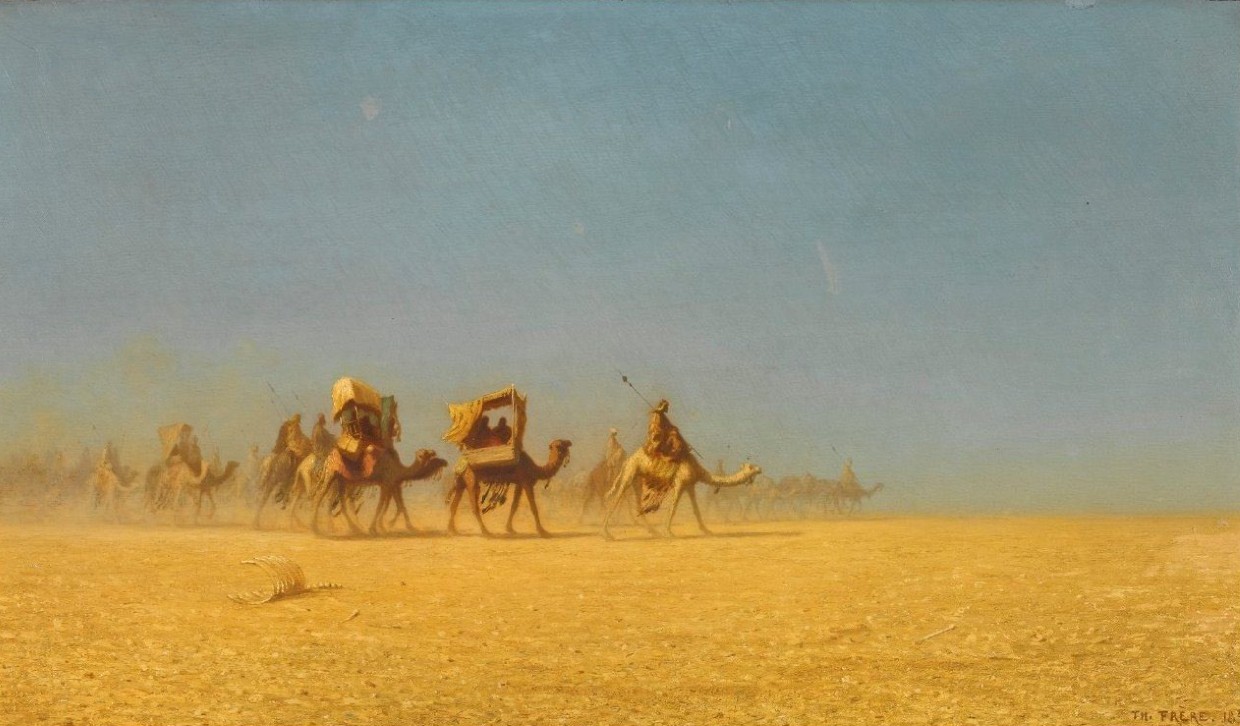
But whose were these camels, and this vast baggage train that had sprung out of the wilderness? And what were his brothers doing now, counting over gleaming silver coins that strange merchantmen were drawing from their purses? Gripped once more in an icy fear, Joseph found himself dragged away, and propelled towards a gang of ragged slaves in the mastery of the desert traders. To the mocking farewells of his brothers, delighted with their bargain, he realised he had been delivered from the pit, only to be sold as a slave.
Providence
Such drama rarely comes our way. But there is one feature of this episode that we should not pass by. That trans-desert caravan crawled into view just as the eleven brothers were sitting down to eat dinner
(v. 25). Its appearance prompted Judah to suggest to the others that they could make a lot of money if they pulled Joseph out of the pit and sold him to the merchantmen for cash (vs. 26–27). The arrival of the camel train swung the whole tide of Joseph’s fortunes. But the timing was critical. If it had come an hour earlier, it might have attracted only passing interest. An hour later, and the brothers might have gone. The caravan must have set out from its starting point in Gilead days before, and yet it arrived just in time to save Joseph’s life.
Admittedly, you could dismiss the whole thing as chance, one of those quirks that are just as likely to bring evil into our lives as good. But we shall find a whole chain of events running forward from this incident for 20 years, in which Joseph’s circumstances were consistently overruled until at last his dreams come true, his brothers bowed before him, and through his high office he could in turn preserve his brothers and his aged father from death by famine.
Joseph himself looked backwards on the amazing series of coincidences that had happened to him, and declared firmly that it was God who had directed his life. “It was not you who sent me here,” he declared to his awe-struck brothers, “but God” (Genesis 45:8). The angel of the Lord, to use the phrase of the Psalmist, had encamped around Joseph to deliver him (Psalm 34:7). By the apparently trivial matter of the time of departure of a camel train, He had arranged that Joseph was plucked from his brothers’ hands, removed to a foreign land, and prepared for the role of deliverer himself.
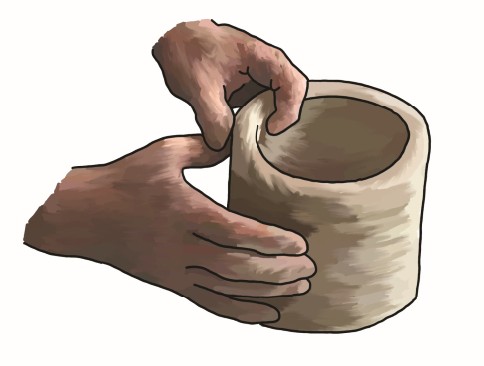
The corollary of this thought is that God can work in our lives too, if we let Him. By just such coincidences He can bring us friends and fortune, or pain and sorrow, shaping our characters and preparing us for His Kingdom. The Bible likens God to a skilled potter (Romans 9:20–21). He deftly changes us from rough lumps of clay into vessels of beauty, not by pressing us willy-nilly into a standard mould, but by altering our circumstances until we develop faith, hope and love, and in the process further His work in the earth.
DAVID PEARCE
(to be continued)