



Rebekah was pregnant. She and Isaac had been married for years, so she was overjoyed to be able to tell him they were going to start a family at last. Unhappily, the pregnancy did not go smoothly. As the months passed, she felt all was not well, and grew troubled and tense. At last, in simple faith, she brought her fears before God, asking for reassurance. Without the need for ultrasonic scanners, He told her the reason for her discomfort. It was going to be twins, He said. And that is just how it turned out at the birth
(Genesis 25:22–24).
Usually when twins arrive, it is vital to tie a marker string to the first born, in case the babies get mixed up. In this case there was no need. The elder son was covered all over with fine red hair. They named him Esau, “the Red”. The two boys turned out to be different in other ways than their appearance as they grew up. Esau was tough, athletic, a hunter and lover of outdoor pursuits, while Jacob preferred shepherding. In the words of Genesis, he was ‘a quiet man, dwelling in tents’ (v. 27).
A Bowl of Stew
One day, an incident took place which was to have lasting consequences. Esau returned from a hunting expedition exhausted and famished, to find Jacob crouched over the fire cooking himself a tasty stew. The savoury aroma set Esau’s gastric juices churning, and the saliva ran in his mouth. ‘“Let me eat some of that red stew,”’ he begged (v. 30). Jacob thought fast. There was a mercenary streak in the family—it comes out later in the character of his uncle and his own sons. Perhaps he had been waiting for this opportunity for years. His eyes narrowed. ‘“Sell me your birthright now,”’ he said (v. 31).

It was an unequal contract. Esau, though born only minutes before Jacob, was indisputably the elder, and entitled to the privileges of the firstborn. On the death of his father he would normally become head of the clan. He would inherit the major portion of his father’s goods, and he would take over the role of family priest. It was worth far more than a steaming bowl of stew. But Esau’s hunger was immediate, and the realisation of the birthright was remote. ‘“I am about to die,”’ he cried, ‘“of what use is a birthright to me?”’ (v. 32). Inwardly Jacob exulted, but perhaps he knew that his brother’s promises could be empty. ‘“Swear to me now,”’ he urged. He wanted to be sure there could be no going back. ‘So he swore to him and sold his birthright to Jacob’ (v. 33). The chronicler concludes with the terse comment, ‘Thus Esau despised his birthright’ (v. 34).
Later, Esau was to attempt to win back the title he had given away, and complain bitterly that he had been deceived (Genesis 27:36), but there is no doubt that at the time, he gave away his rights quite voluntarily. The New Testament fills out the incident for us. There is a stern warning from the writer to the Hebrews: ‘…that no one is sexually immoral or unholy like Esau, who sold his birthright for a single meal’ (Hebrews 12:16).
This indictment of Esau shows that he was exchanging more than the right to his father’s goods. The family of Abraham had a special privilege. Through their line was to come the offspring who was to bring blessing to all nations (Genesis 22:18). In handing over to Jacob the headship of the family, Esau was despising a precious link with the future, and declaring that he was only concerned about the present. ‘“I am about to die,”’ he had declared. It is an old story, and painfully familiar today. “Eat, drink and be merry” is an almost universal philosophy, and the proverbial birds in the bush held out by the Bible are traded for the bird in the hand, with no regrets until death really does draw near and it is too late to change.
If at first sight, Jacob’s action appears mean and unbrotherly, we must note God’s declaration through His prophet that ‘I have loved Jacob but Esau I have hated’ (Malachi 1:2–3). Jacob may seem a more insipid character than rugged, macho Esau. But Jacob’s heart was in the right place. Eventually, chastened by sorrow and tragedy, he became a shining example of faith like his grandfather Abraham, and the great God of the universe chose to call Himself, as he does repeatedly throughout the Bible, ‘the God of Jacob’ (for example Exodus 3:6). It was a question of attitude. Jacob was sowing for a future harvest, but Esau turned his seed corn into bread for today.
Deception
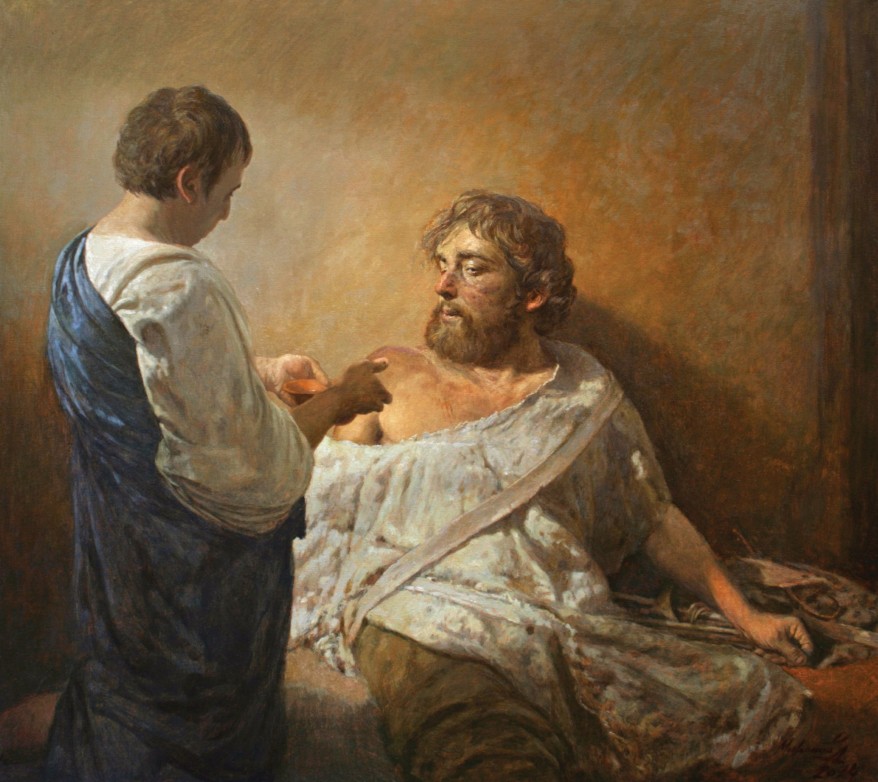
Jacob outwitted his brother a second time. The account is in Genesis 27. He managed to secure his father’s solemn deathbed blessing by dressing up in hairy goatskins and pretending to the sightless old man that he was his elder brother. This scoop enraged Esau, and was the cause of Jacob leaving home and embarking on many hardships and adventures. But it illustrates yet again Jacob’s determination to win the family’s greatest treasure—the blessing of Abraham. Isaac confirmed this to him as Jacob left home. ‘“God Almighty bless you.”’ he pronounced. ‘“May he give the blessing of Abraham to you and to your offspring with you, that you may take possession of the land of your sojournings that God gave to Abraham”’ (28:3–4). Like Abraham, Jacob never did possess the land in his lifetime. But he assuredly will, when those who, like Esau, think only of the present, are consigned to eternal oblivion.
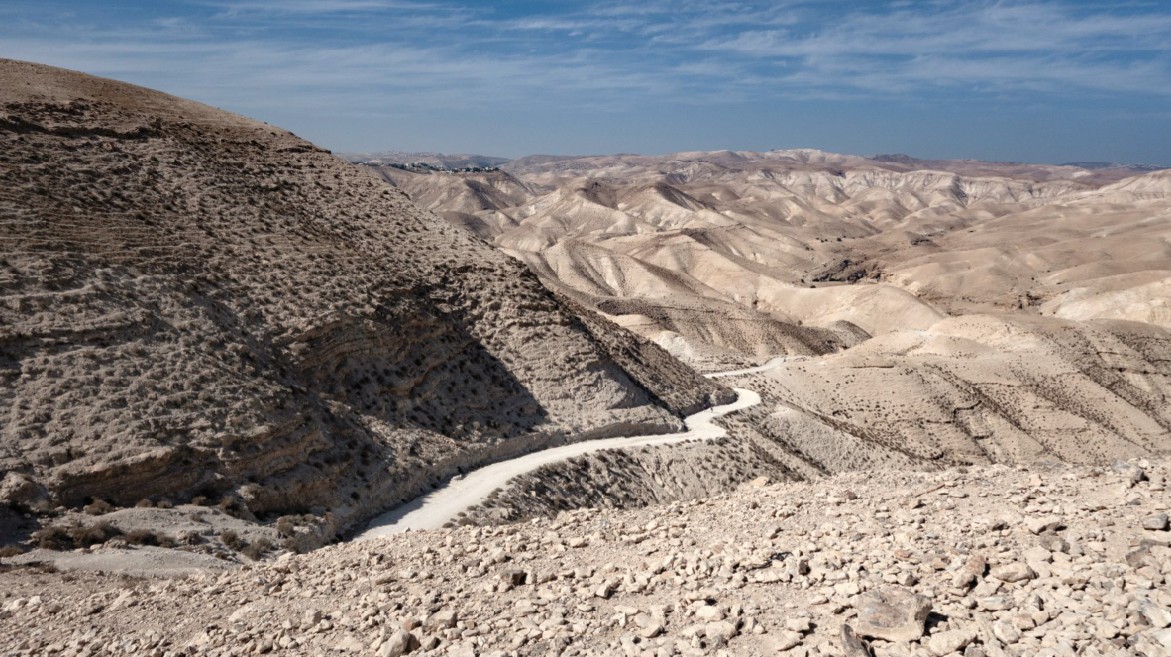
Jacob was forced to flee from his angry brother, against all his home-loving instincts. He journeyed northwards to stay with his uncle Laban until Esau’s anger died down. In passing, we can prove that although timid by nature, Jacob was no weakling. In his first day’s travel he set out from Beersheba and arrived at Bethel by dusk. It was a journey of 40 miles—no mean feat for a traveller on foot! Later on he was to roll a huge stone from the mouth of a well, unaided, and later still, to prove his skill at wrestling. Jacob was not lacking in physical strength. But certainly on this first night away from home he was weary, dispirited and insecure. Years later, he was to remember it as ‘”the day of my distress”’ (Genesis 35:3).
The God of Bethel
How wonderful, then, that at this critical hour God gave him a great vision, which not only helped him face his immediate anxieties, but renewed his faith in the long distant future. As he lay exhausted on a stone pillow under the blazing stars, there came brilliantly into his mind the picture of a huge ladder or staircase, stretching up into the sky, with God standing at the top, and himself at the bottom. Dazzling angels ascended and descended the shining rungs. Lifted above his worries about Esau and the dangers that lay ahead, Jacob was instantly linked with eternity. God spoke to him:
‘“I am the Lord, the God of Abraham your father and the God of Isaac. The land on which you lie I will give to you and to your offspring… Behold, I am with you and will keep you wherever you go, and will bring you back to this land. For I will not leave you until I have done what I have promised you”’ (Genesis 28:13-15).
‘“I will not leave you”’—what an inspiration that would be to Jacob in years to come. If we envy these patriarchs their age of open visions, when God revealed Himself directly to people, we can be thankful that we have the written record of how God brought them safely through their pilgrimages. And we have the assurance of the writer to the Hebrews that that same promise can apply to us also, if we are servants of God. The Apostle comforts us with these words: ‘He has said, “I will never leave you nor forsake you.” So we can confidently say, “The Lord is my helper; I will not fear; what can man do to me?”’ (Hebrews 13:5–6).
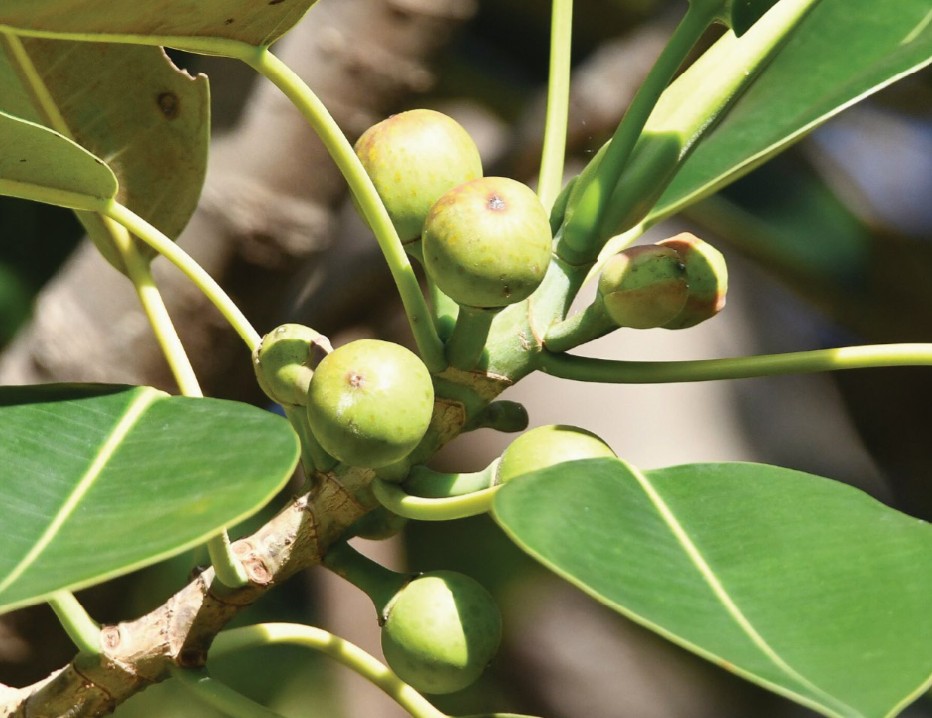
That vision of the ladder bridging between earth and heaven—what did this symbolize? We can see from the New Testament its identification with Jesus Christ, the illustrious descendant of Jacob. He would provide in himself the link between God and us. Through his sacrifice, sinners can be transformed into saints, and made fit for the presence of God. It was probably with Jacob’s vision in mind that Jesus urged his friend Nathaniel, startled into recognising him as the long-promised Messiah, to see in him more than just the King of Israel. He was to be the redeemer of the human race. ‘“Because I said to you, ‘I saw you under the fig tree’, do you believe? You will see greater things than these,”’ he said to his new disciple. ‘“Truly, truly, I say to you, you will see heaven opened, and the angels of God ascending and descending on the Son of Man”’ (John 1:50–51). Like Nathaniel, by the grace of God, we can see the fulfilment of the promises to the patriarchs—the coming of the offspring of Abraham who will open the way for all faithful believers to inherit the earth for ever.
DAVID PEARCE
(to be continued)