


‘You shall have no other gods before me.’
(Deuteronomy 5:7)
False worship comes in many disguises. It is deceptive, beguiling and appealing. Sometimes it appears to be so close to ‘the real thing’ that we can fail to see the difference. It is as the Apostle Paul wrote: ‘I am astonished that you are so quickly deserting him who called you in the grace of Christ and are turning to a different gospel—not that there is another one, but there are some who trouble you and want to distort the gospel of Christ’ (Galatians 1:6–7). His message chided the believers who had been persuaded to embrace a false gospel (which effectively denied salvation in Christ).
The Law of Moses
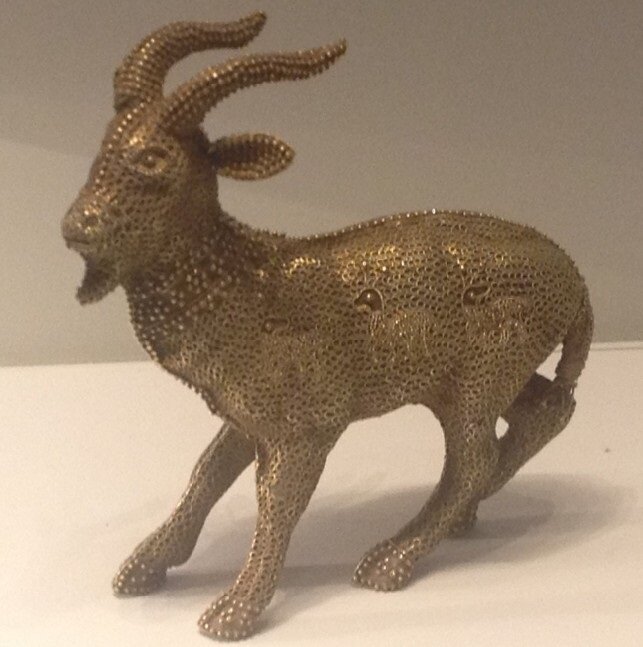
In preparing the people of Israel for life in the Promised Land, God gave them com-mandments regarding their worship, particularly when sacrifices were to be offered. One of the earliest references is Leviticus 17:7 which reads, ‘They shall no more sacrifice their sacrifices to goat demons, after whom they whore.’ The goat demons were pagan idols. This is a prohibition on animal worship and sacrifice to pagan idols. There are three more references in the Old Testament which also specifically prohibit animal and idol worship (Deuteronomy 32:17, 2 Chronicles 11:15, and Psalm 106:36–38).
Paganism
The background to this prohibition is that the demons are of pagan origin and a creation of the natural ungodly mind. In the ancient world they were often believed to be kinds of demi-gods inhabiting the air, causing illness and disease in humans by taking possession of the individual. These so-called supernatural beings appear in most pagan religions as, for example, spirits of natural objects (trees, fire, water, sun, animals), souls of dead ancestors, or the offspring of gods cohabiting with mortals.
This belief presumes the ideas of the immortality of the soul and a personal devil.* As ‘demons’ are pagan gods and idols, they have no real existence.
The problem for the people of Israel was that the indigenous people of Canaan, whom the Israelites were instructed to destroy, were pagan and idol worshippers. Associated with this kind of religion was an indulgent mindset, with an emphasis on sexual deviation and personal satisfaction. God foresaw that this would be a huge temptation for the people of Israel and legislated against it in His law. He had also provided that His people worship at the Tabernacle and later the Temple, where they would observe holy and honourable practices.
The Leviticus passage quoted above was referred to by the Apostle Paul when he wrote to the Christian community at Corinth. ‘I imply that what pagans sacrifice they offer to demons and not to God. I do not want you to be participants with demons. You cannot drink the cup of the Lord and the cup of demons. You cannot partake of the table of the Lord and the table of demons’ (1 Corinthians 10:20-21). Evidently the forbidden pagan practices of the Old Testament were being reproduced in New Testament Corinth, and some of the Christian converts had been, or continued to be, engaged with this very unchristian behaviour. The apostle was very firm in his censure and commanded them to avoid it. He drew a clear distinction between ‘the cup of the Lord and the cup of demons’, and ‘the table of the Lord and the table of demons’ (contrasting the feasts in Pagan temples with the Christian ‘love feasts’ (Jude:12). They were totally incompatible and created a conflict of loyalty and integrity for those who confessed the Christian gospel.
Old Testament Teaching
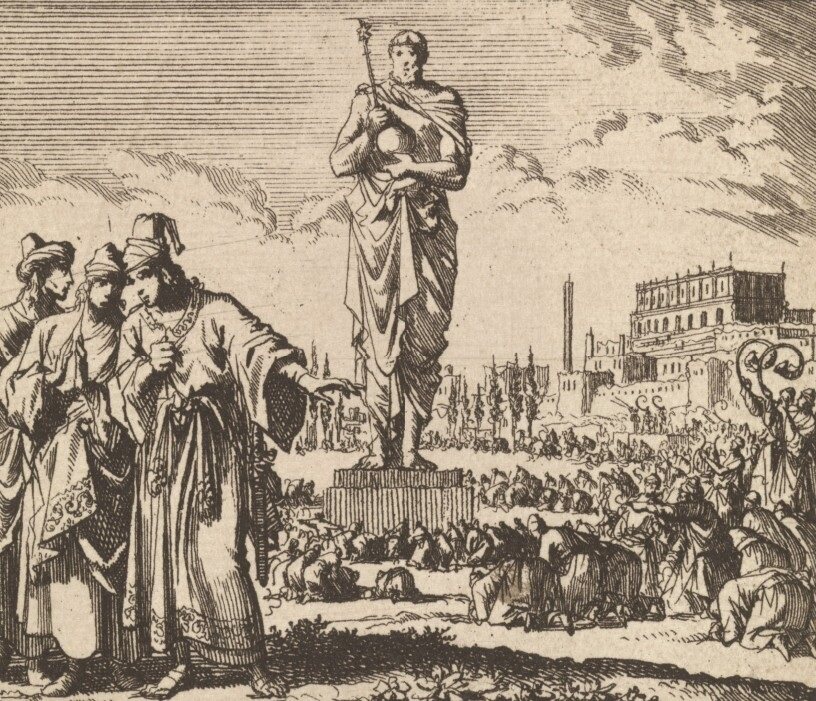
Let us take another Old Testament example. Daniel 3:3–18 is the account of the call to worship of a huge gold image that King Nebuchadnezzar had built in the plain of Dura in Babylonia. When music played, everybody was to bow down and worship the image. The people were being compelled to commit idolatry. For three God-fearing Jewish captives, this was too much to ask. They refused. The penalty was death in a fiery furnace. They were appealed to but still refused, choosing to rely on the God whom they faithfully worshipped, believing He could deliver them. They did not bow down and worship the idol. The punishment was carried out. The story goes on to describe how they survived the fire with the help of an angel of God. Their faith had been rewarded.
New Testament Times
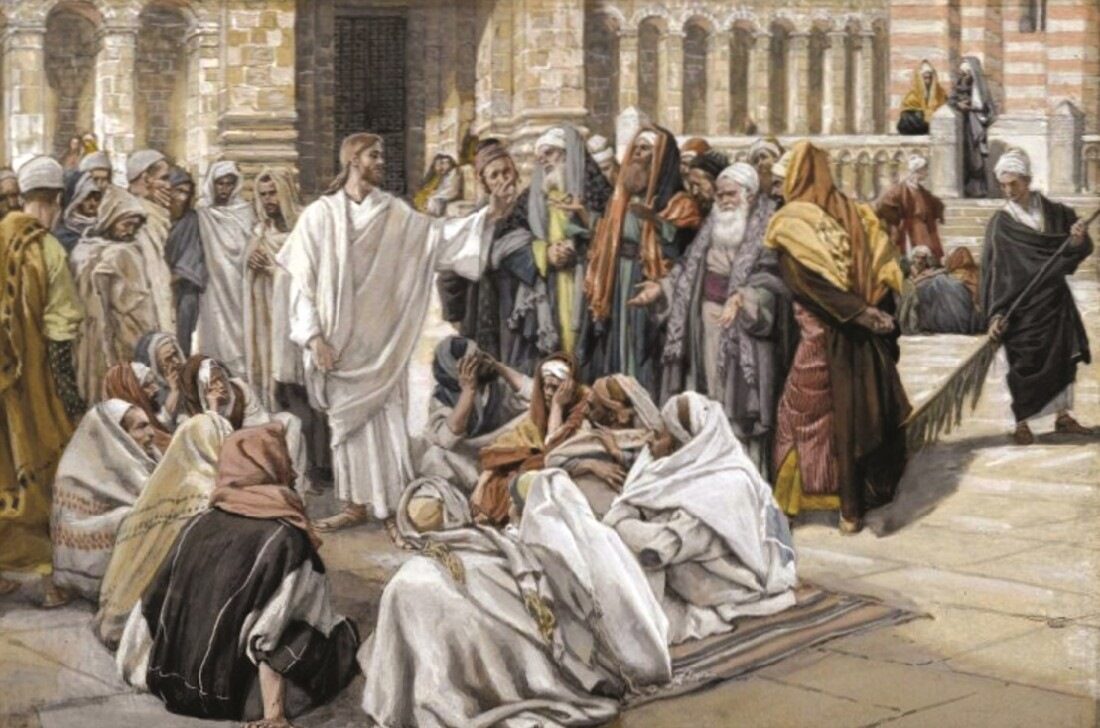
In Matthew 15:1–9 we see one of the numerous confrontations between the Lord Jesus and the scribes and Pharisees. They were part of the religious authority at the time. In addressing the duty of honouring father and mother, which the scribes and Pharisees spectacularly failed to do, Jesus said, “For the sake of your tradition you have made void the word of God. You hypocrites! Well did Isaiah prophesy of you, when he said: ‘This people honours me with their lips, but their heart is far from me; in vain do they worship me, teaching as doctrines the commandments of men’” (vs. 6–9).
Clearly Jesus disapproved of their corrupt practice which denied the wisdom of God. The traditions of the religious authority were irreconcilable with the teaching of Jesus which he received from God, and therefore to be refused. Although this issue was not about physical images or idols, ‘the commandments of men’ were equally repugnant and to be rejected. The religious leaders had set aside the commandments of God by their traditions.
Today
Some churches and religious places still display icons and images, which easily become objects of worship. This is precisely what God instructed the children of Israel to avoid. It is worshipping ‘the creature rather than the Creator’, as the Apostle Paul explained (Romans 1:25). He carried on to describe the immoral behaviour which easily flows from idolatry. God detests these developments, and His commandments to His people 3,500 years ago was intended to make His people aware of its dangers.
Finally, the way worshippers present themselves receives comment. ‘Do not let your adorning be external—the braiding of hair and the putting on of gold jewellery, or the clothing you wear—but let your adorning be the hidden person of the heart with the imperishable beauty of a gentle and quiet spirit, which in God’s sight is very precious’ (1 Peter 3:3–4).
VIC AUCOTT
(to be continued)