



Let us not pretend that we never encounter difficulties when we read and seek to understand the Bible. Sometimes there are textual difficulties, where we see apparent contradictions within the Bible narrative. Sometimes the narrative is morally difficult—perhaps God commands something that seems to be unjust or cruel. If they are left as difficulties, these questions may be discouraging or disheartening. But when they are answered, faith in the Word of God will be strengthened. We shall address a few of these difficulties here, and by so doing we shall perhaps gain insight into how these kinds of difficulties can be solved.
Imprecatory Psalms
We shall think first of the phenomenon of “imprecation” in the Bible. “Imprecation” means “calling down” or “invoking”, and in the Bible we find people invoking or calling down evil from God upon their enemies. This seems barbarous. How can it be that the writer, being inspired to write by the Holy Spirit, does so in such a cruel and vindictive way? So you can see that the difficulty is not only a moral one, but also one involving inspiration itself—if we cannot imagine God inspiring a person to call down evil upon their enemies, then perhaps these parts of the Bible are not inspired.
Psalm 109 contains a typical case of imprecation. The writer is complaining to God about his enemy: ‘Appoint a wicked man against him; let an accuser stand at his right hand. When he is tried, let him come forth guilty; let his prayer be counted as sin! May his days be few; may another take his office! May his children be fatherless and his wife a widow!…’ (vs. 6–9).
With that Psalm in mind come to Acts 1. Shortly after Jesus has ascended to heaven, the Apostle Peter is speaking to his fellows about the betrayal of the Lord by Judas Iscariot, who was one of their own number. “Brothers, the Scripture had to be fulfilled, which the Holy Spirit spoke beforehand by the mouth of David concerning Judas, who became a guide to those who arrested Jesus… For it is written in the Book of Psalms, ‘May his camp become desolate, and let there be no one to dwell in it’; and ‘Let another take his office’” (vs. 16–20).
I submit that when we read Psalm 109 by itself we should never have guessed that it had reference to Judas. But when we read the Acts commentary we see two things: firstly, that it was indeed the Holy Spirit that was moving David to write those words; and secondly, that the Psalm was not just referring to immediate circumstances in David’s life, but it had a much wider reference. On the authority of Peter, the Psalm refers to Judas.
Just to enforce this argument, I wish to bring you to another example in Acts. Peter at Pentecost quotes from Psalm 16 and in particular the words of the psalmist that ‘you will not abandon my soul to Sheol, or let your holy one see corruption. You make known to me the path of life; in your presence there is fullness of joy; at your right hand are pleasures for evermore’ (vs. 10–11).
On the face of it nobody could blame us if we thought that the psalmist was speaking of himself when he wrote. And yet Peter makes it quite clear that the writer was not speaking of himself at all. He quotes the Psalm, and continues, “Brothers, I may say to you with confidence about the patriarch David that he both died and was buried, and his tomb is with us to this day. Being therefore a prophet, and knowing that God had sworn with an oath to him that he would set one of his descendants on his throne, he foresaw and spoke about the resurrection of the Christ, that he was not abandoned to Hades, nor did his flesh see corruption” (Acts 2:29–31).
This throws interesting light on the nature and function of the Psalms. They are often prophetic. On the face of it you would not always think so, but it was true in the case of the prophecy about Judas and true also in the case of the prophecy about Christ. So let us notice what we have seen so far:
1. that words which seemed to spring out of this passion and prejudice of human revenge are in fact not human but divinely inspired, not the words of men but the words of God
2. that although the words primarily relate to personal situations in the life of the writer, they are also deeper and more far reaching and often prophetic.
Now, these two principles lie at the root of a right understanding of imprecation in the Bible.
In our English Bibles, the tense is always what is called the “imperative” —that is to say, the words demand that God shall do this or that. For example ‘Let his prayer be counted as sin! May his days be few’ (Psalm 109:7–8). But the Hebrew text uses not the “imperative” but the “futurist” tense—the writer is not demanding that bad things happen, but foretelling that they will. It is a warning of the judgement which will fall one day upon the wicked, whether individuals or nations. It would apply to the wicked of the psalmist’s day, or any other day if they will not repent. Jesus said it too: “Unless you repent, you will all likewise perish” (Luke 13:3).
The words of the Psalmist then are not the words of human passion and prejudice, but God’s words, and they reveal principles upon which all ages are to be judged. If you read Psalm 109 carefully you will see that the words are the revelation of judgement against those who hate, deceive and lie, who reward evil for good and hatred for love.
The Flock of Quail
In answer to the Israelites’ request for food in the wilderness, ‘a wind from the LORD sprang up, and it brought quail from the sea and let them fall beside the camp, about a day’s journey on this side and a day’s journey on the other side, round the camp, and about two cubits above the ground’ (Numbers 11:31).
A day’s journey on one side would be about 20 miles, and a day’s journey the other side would be about 20 miles, so there was an area of land 40 miles broad around the camp of Israel upon which the quails fell. They fell two cubits high, which is about three feet or 90 centimetres. This seems an impossible quantity. The Israelites could not have eaten them, the sheer volume of meat would in fact have presented a hygiene problem. That is most unlike the way God works: He does not waste the things He provides. There is evidently a difficulty here.

Look at that verse again. The Hebrew word which is translated “beside” can also be translated “over”. They fell over the camp about two cubits above the face of the earth. I suggest what actually happened was that the wind brought them in from the sea and swept them about 3 feet above the earth—that is to say within easy reach. There was perhaps some supernatural weather phenomenon which trapped the flock of quail near the ground in this 40 mile area, and as they were swept along by the wind at waist height they could be easily collected. That is a reasonable understanding of the narrative, and it would harmonise with how we see God working in other parts of the Bible.
Plague in the Wilderness
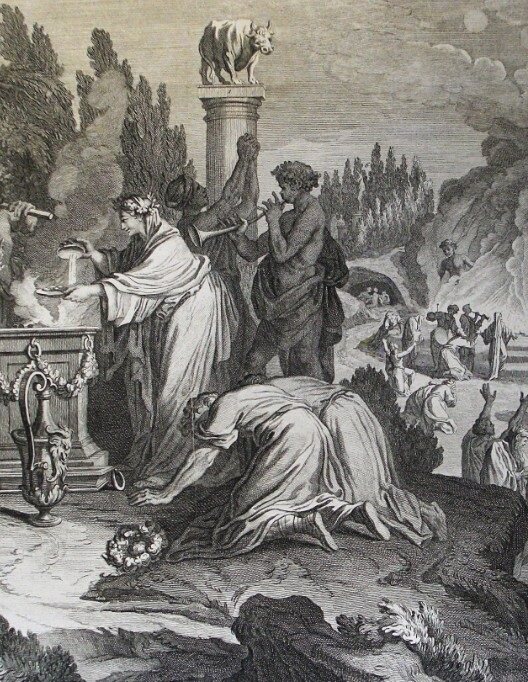
While they were in the wilderness, God brought a terrible plague upon the Israelites because of an episode of lewdness and immorality. The account states, ‘those who died by the plague were twenty-four thousand’ (Numbers 25:9).
The Apostle Paul in the New Testament makes reference to this incident in his Corinthian letter: ‘We must not indulge in sexual immorality as some of them did, and twenty-three thousand fell in a single day’ (1 Corinthians 10:8). Did Paul make a blunder? There is no doubt that he is referring to the same incident in Numbers 25, but he appears to have got the number wrong.
The reason I have included this example is that it reveals an important solution. We must read the text very carefully. The actual account of the plague in Numbers states that the total number of deaths was 24,000. Paul reveals that the plague was so severe that 23,000 of those deaths occurred in a single day.
This solution shows something that is often overlooked when people become perplexed by this kind of difficulty: the need to read the passage carefully, and be sure that account has been taken of every factor. Very often the only reason difficulties occur is that some factor in the incident or narrative has been overlooked, and conclusions are reached prematurely without careful reading and careful thought. It is this principle which brings me to my last difficulty: the failure and death of Judas Iscariot.
Death of the Betrayer
In Matthew 27 we see the tragic end of Judas Iscariot, the disciple who betrayed Jesus. ‘When Judas, his betrayer, saw that Jesus was condemned, he changed his mind and brought back the thirty pieces of silver to the chief priests and the elders, saying, “I have sinned by betraying innocent blood.” They said, “What is that to us? See to it yourself.” And throwing down the pieces of silver into the temple, he departed, and he went and hanged himself. But the chief priests, taking the pieces of silver, said, “It is not lawful to put them into the treasury, since it is blood money.” So they took counsel and bought with them the potter’s field as a burial place for strangers’ (vs. 3-7).
There appears to be a conflict between this account and Luke’s account: ‘Now this man acquired a field with the reward of his wickedness, and falling headlong he burst open in the middle and all his bowels gushed out. And it became known to all the inhabitants of Jerusalem, so that the field was called in their own language Akeldama, that is, Field of Blood’ (Acts 1:18–19).
You can see the difficulty—the accounts just do not agree. In one the priests purchased the field, in the other it was Judas; in one he hanged himself, in the other he fell and was disembowelled.
The solution lies in the principle I have already urged—that is, not to jump to conclusions. Why should it be supposed that the words ‘reward of his wickedness’ must refer to the 30 silver pieces betrayal money? Careful reading of the New Testament reveals that Judas was treasurer of the band of disciples, but was also a covetous man and had been a thief for a long time. He had consistently been robbing the little band of its money (John 12:6). Rather than having just bought the field with the priests’ silver, could he not have bought it previously with money filched from the bag? Then when he wanted privacy to commit suicide, that would be the logical place to go. So there were two different purchases, one by Judas and one by the priests. It may even be that it was the same field: after the death of Judas the field would come on to the market, and maybe it was purchased by the priests—a touch of ironic justice, that the field which Judas had purchased with stolen money was purchased again with the betrayal money which he had disowned!
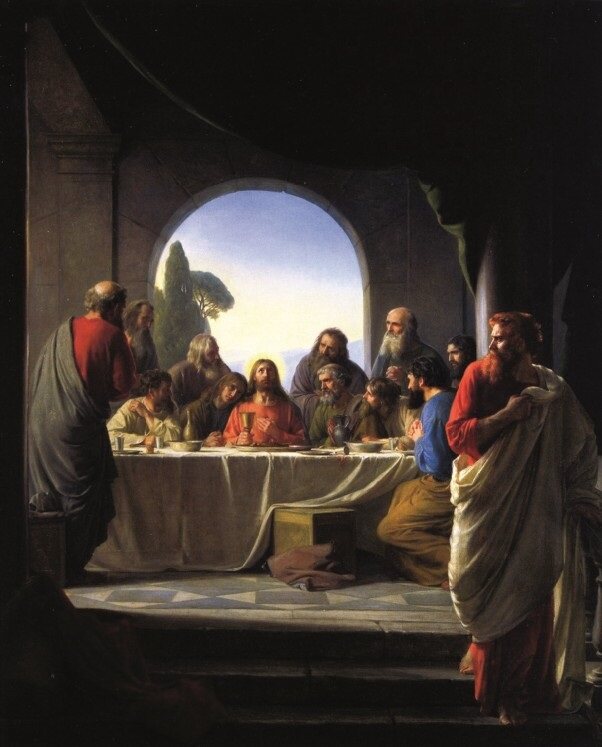
And with regard to the actual death of Judas: one account says he hanged himself, the other that he fell headlong, burst open and his bowels gushed out. Is this necessarily a contradiction? I know this is not a nice subject, but an improvised hanging is usually conducted by jumping from a height with a rope around the neck. Perhaps the rope snapped and the body tumbled to the ground and burst apart. One account is a description of the manner of his death, the other is a postmortem description of the result. So, taking into account all the factors and not jumping to conclusions too readily, I submit that there is no contradiction between these two accounts.
My purpose has been to illustrate that when the Bible presents apparent difficulties, they can be solved by an honest, humble, careful investigation. ‘This is the one to whom I will look: he who is humble and contrite in spirit and trembles at my word’ (Isaiah 66:2). When we acknowledge that the Word of God is holy, true and soundly infallible, we will accept that difficulties when they arise are our difficulties, not God’s difficulties, and it is our privilege and our duty to seek out God’s solution.
DENNIS GILLETT