


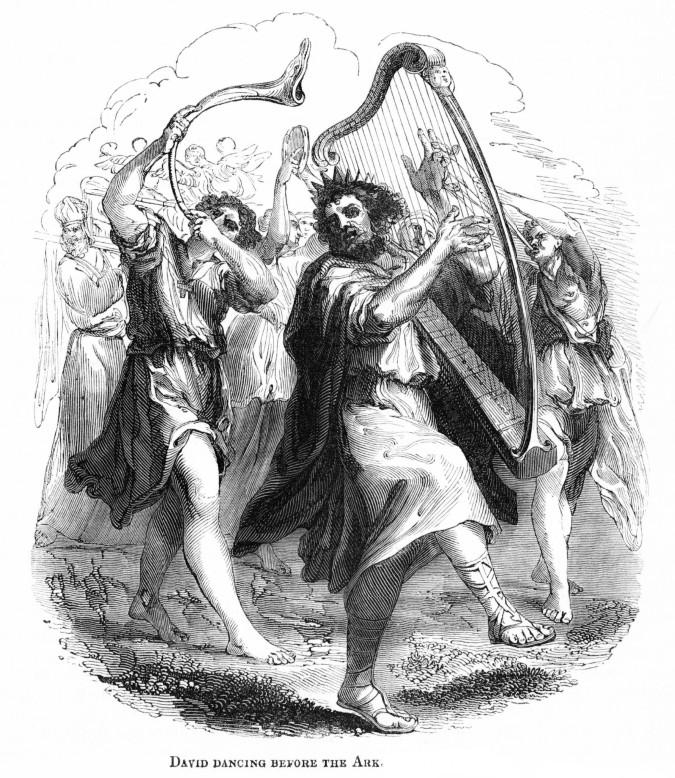
‘Then he appointed some of the Levites as ministers before the ark of the LORD, to invoke, to thank, and to praise the LORD, the God of Israel.’
(1 Chronicles 16:4)
It was King David’s vision to build the Temple of the Lord in Jerusalem and provide a permanent resting place for the Ark of the Covenant. The Ark was a gold-clad box, with a lid called the “mercy seat” which was made from one piece of solid gold and included two inward-looking winged figures—cherubim. The Ark represented the dwelling place of God. It had been made during the wilderness journey to the Promised Land, and was sacred to the people of Israel. Years earlier, the wicked sons of Eli the High Priest had taken the Ark into battle against the Philistines as a talisman to try to ensure their success (1 Samuel 4:2–11). Israel was routed in the battle and the Ark was captured by the Philistines. 1 Samuel chapters 5–7 tell how God brought the Ark back into Israel.
David was a man of great faith. He wanted to bring the Ark into his capital city, Jerusalem. He pitched a tent, and brought the Ark into it as a temporary home in preparation for building God’s temple (1 Chronicles 15:1). But he was not able to build the temple: God told him, “You may not build a house for my name, for you are a man of war and have shed blood” (28:3). Undeterred, he set about making preparations so his son Solomon could build it.
Generous Contributions
David made financial and other necessary preparations for the building of the temple, with its worship and organisation. He had evidently discussed this with Samuel the prophet, before Samuel died several years earlier (1 Chronicles 9:22). Together they established the working arrangements of the new temple which was yet to be built. He obtained from Ornan the Jebusite the threshing floor on the top of Mount Moriah, where the temple should be built (1 Chronicles 21:18–30). This was probably the very place where Abraham had taken his son Isaac when he was instructed to offer him as a burnt offering, a thousand years before (Genesis 22). Although the temple would be for the worship and instruction of the Jewish people, the fact that it was built on land purchased from a Jebusite anticipated the inclusion of Gentiles (non-Jews) into the overall purpose of God.
Appointments
The final entrance of the Ark of the Covenant into Jerusalem was a time of great rejoicing. It was secured in its tent, and the people offered their worship and thanksgiving, through their sacrifices and peace offerings. It was an occasion when fellowship was shared and enjoyed by the people, with the distribution of bread and wine supplied by the king. It was also the time when the music, singers and musicians for the temple were appointed. The leader of the choir and orchestra in Jerusalem was Asaph the Levite, along with other Levites (men from the clan of Levi), and priests (Levites from the priestly family of Aaron).
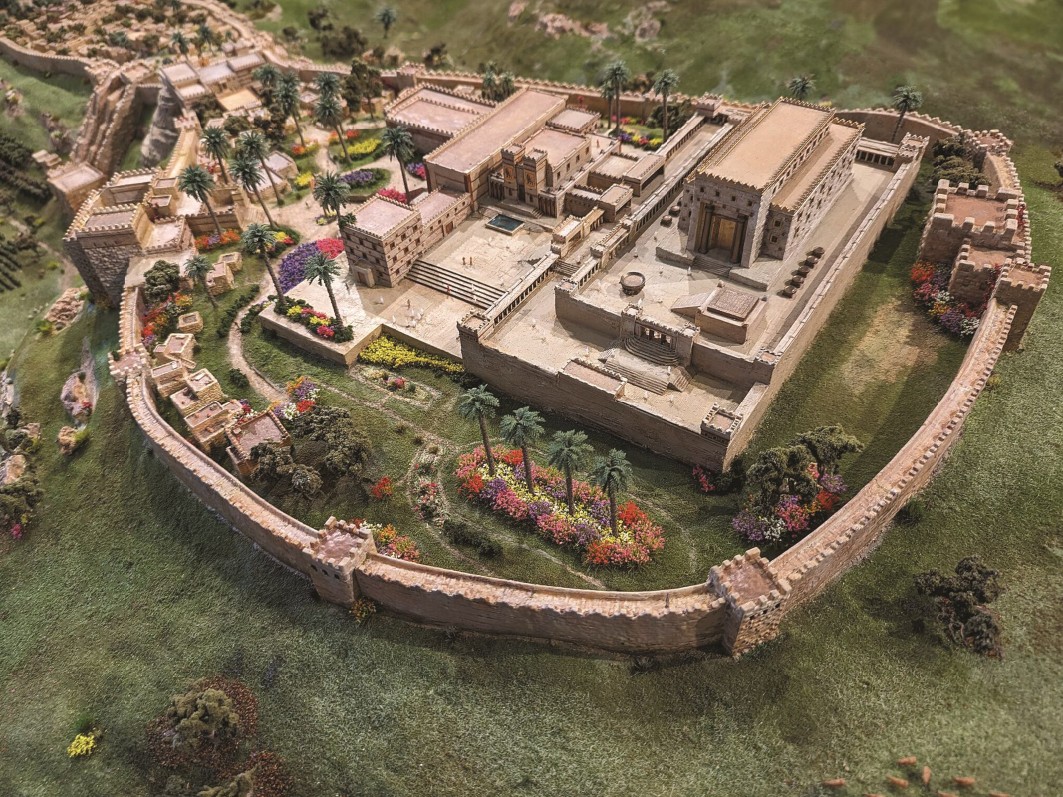
At this time the tabernacle, which previously housed the Ark, was located in Gibeon (1 Chronicles 16:39). Heman and Jeduthun were based there, with Zadok the priest. As well as an orchestra consisting of lyres, harps and cymbals, the choir of 288 singers with their teachers was divided into 24 groups of 12 in each, who played and sang ‘for the service of the house of God’ (1 Chronicles 25:6). The aim of this was to teach the people the things and ways of God, but principally to be to the praise and glory of God Himself.
The Hymn Book
‘Then on that day David first appointed that thanksgiving be sung to the Lord by Asaph and his brothers’ (1 Chronicles 16:7). This was the start of the formalisation of the Jewish hymn book, which was to be used in temple worship. This first provision of words and music was a collection of songs which are now included in the book of Psalms in the Bible. They were parts of what we know as Psalms 96, 105, 106, 107, 118, 136, and possibly 132.
These are all psalms of rejoicing and hope, of praise and thanksgiving to God for His mercy and truth towards His people Israel. They look back to the sad and disappointing way Israel behaved during their time in Egypt and then during the wilderness journey. The psalms recall the people’s difficulties and afflictions, how their cries to God were heard and answered, and how He saved them out of all their troubles. But the psalms also look forward to the time of peace and safety when the promised Kingdom is established in fulfilment of the ancient promises to Abraham, Isaac and Jacob. God also made a specific promise to David himself (2 Samuel 7:12–16)—a prophecy which looked into the future ‘for a great while to come’ (v. 19). This promise looked forward to David’s descendant Jesus Christ who will sit on his throne for ever (Luke 1:31–33).
Praise
In these psalms David is fulsome in his praise of the wisdom of God for all that He had done and will do. David believed that God is faithful and steadfast. He was confident in his faith and commitment to the promises of the God of Israel. He wanted the singing and music in the temple to reflect and redound to the goodness of God, and for the praise of the choirs and orchestra to be fulfilling and inspiring for the people. For far too long they had been astray from the true worship of God, and David saw his role as to bring the people back to God. The king was concerned that the nation should be true to the covenant which they had willingly embraced, and which had been confirmed at Horeb in the wilderness journey, when the people promised, “All that the LORD has spoken we will do” (Exodus 19:8).
VIC AUCOTT
(to be continued)