


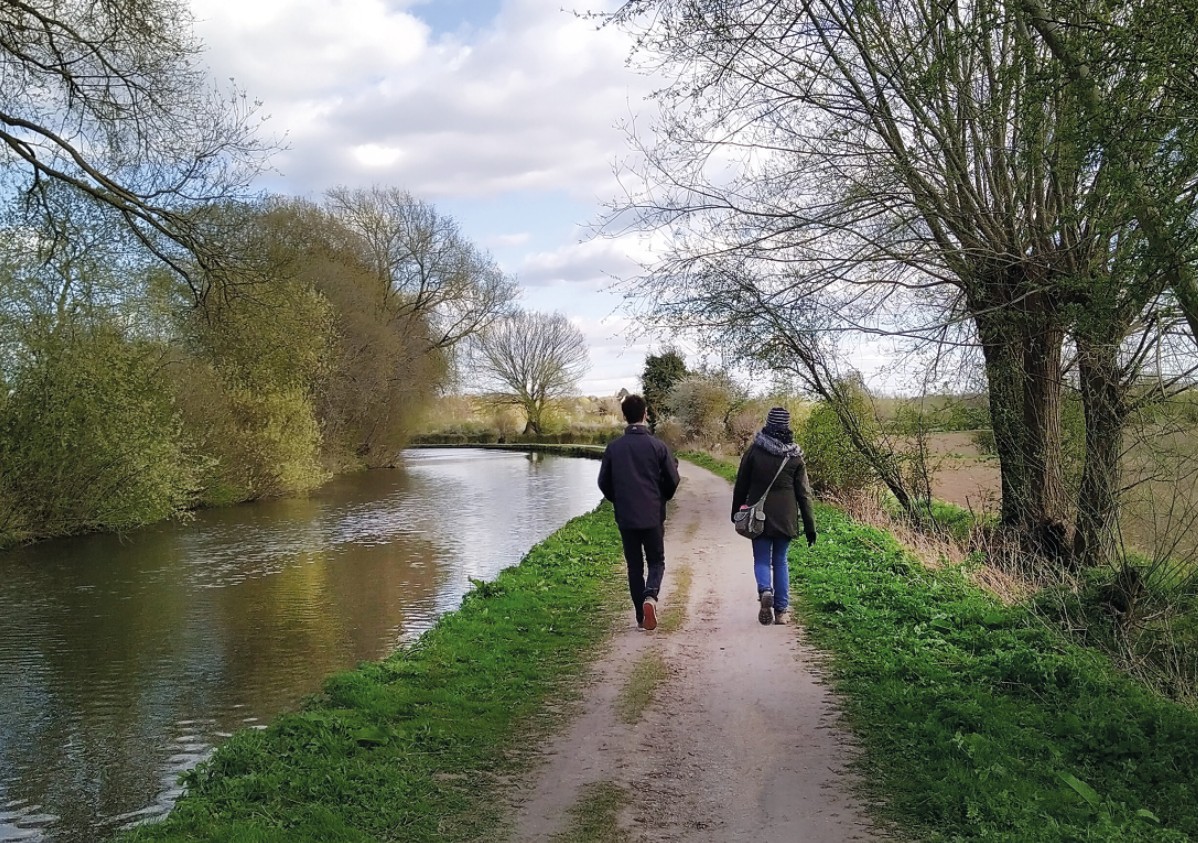
‘ Do two walk together, unless they have agreed to meet?’ (Amos 3:3). The answer to this question is often yes—it’s a fact of life. But we are looking at a different level of walking—walking with God, which we find in the Bible. This is not an ordinary walk down the street; we are speaking of a spiritual way of life, which is a life of seeking God in His word and keeping His commandments.
In Genesis 5 we read, ‘Enoch walked with God after he fathered Methuselah 300 years and had other sons and daughters’ (v. 22). Imagine that, walking with God for 300 years! No wonder ‘God took him’ (v. 24). He was a truly faithful, God-fearing man.
Then, there is Noah who, the Bible tells us, also walked with God (Genesis 6:9).
This walking with God is another way of saying, living a faithful, trusting, and a fully devoted life to God—in godliness and righteousness.
Before he died, king David commanded his son, Solomon: ‘Be strong, and show yourself a man, and keep the charge of the Lord your God, walking in his ways and keeping his statutes, his commandments, his rules, and his testimonies, as it is written in the Law of Moses, that you may prosper in all that you do and wherever you turn’ (1 Kings 2:2–3).
‘Love the Lord your God’
Moses commanded the Israelites, ‘You shall therefore love the Lord your God and keep his charge, his statutes, his rules, and his commandments always’ (Deuteronomy 11:1). If they did this, great blessings would follow: ‘For if you will be careful to do all this commandment that I command you to do, loving the Lord your God, walking in all his ways, and holding fast to him, then the Lord will drive out all these nations before you, and you will dispossess nations greater and mightier than you’ (vs. 22–23).
You may notice that these blessings from God were dependent upon Israel doing as He required of them.
After David and Solomon, there were other kings over Israel and Judah. Some were good and some were bad. Asa was a good king, as was Jehoshaphat his son: ‘He walked in the way of Asa his father and did not turn aside from it, doing what was right in the sight of the Lord’ (2 Chronicles 20:32). Ahaziah, by contrast, was a member of a godless dynasty: ‘He did what was evil in the sight of the Lord and walked in the way of his father and in the way of his mother and in the way of Jeroboam the son of Nebat, who made Israel to sin (1 Kings 22:52).
It is the knowledge and application of God’s Word that kept the good kings and the prophets, and the faithful people, walking on the path that leads to life: ‘Your word is a lamp to my feet and a light to my path’ (Psalm 119:105). By putting God’s word in their hearts, the faithful can walk with God.
He has told you, O man, what is good; and what does the Lord require of you but to do justice, and to love kindness, and to walk humbly with your God? (Micah 6:8).
Israel’s Example
God appealed through His prophet Jeremiah to the people of Israel to mend their evil ways: ‘Thus says the Lord: “Stand by the roads, and look, and ask for the ancient paths, where the good way is; and walk in it, and find rest for your souls. But they said, ‘We will not walk in it”’ (Jeremiah 6:16). They refused to listen to God. So He warned them: ‘Behold, a people is coming from the north country, a great nation is stirring from the farthest parts of the earth. They lay hold on bow and javelin; they are cruel and have no mercy; the sound of them is like the roaring sea; they ride on horses, set in array as a man for battle, against you, O daughter of Zion!’ (vs. 22–23).

The nation of Israel was destroyed, first by the Babylonians and then by the Romans. But God promised that He would not make a full end of them (Jeremiah 30:11). They have returned from exile, as God promised. There will come a time (which is still in the future) when they will mend their ways and walk with God: ‘I will sprinkle clean water on you, and you shall be clean from all your uncleannesses, and from all your idols I will cleanse you. And I will give you a new heart, and a new spirit I will put within you. And I will remove the heart of stone from your flesh and give you a heart of flesh. And I will put my Spirit within you, and cause you to walk in my statutes and be careful to obey my rules (Ezekiel 36:25–27).
The prophet Isaiah also said that there would come a time when the people of Israel will no longer go astray: ‘And your ears shall hear a word behind you, saying, “This is the way, walk in it,” when you turn to the right or when you turn to the left’ (Isaiah 30:21).
In the New Testament
The metaphor of walking spiritually is also found in the New Testament.
Do you not know that all of us who have been baptized into Christ Jesus were baptized into his death? We were buried therefore with him by baptism into death, in order that, just as Christ was raised from the dead by the glory of the Father, we too might walk in newness of life (Romans 6:3–4).

To walk with God is to turn away from our old life and walk in a new direction.
Uprightness and godliness come from following God’s Word: ‘Brothers, join in imitating me, and keep your eyes on those who walk according to the example you have in us. For many, of whom I have often told you and now tell you even with tears, walk as enemies of the cross of Christ. Their end is destruction, their god is their belly, and they glory in their shame, with minds set on earthly things’ (Philippians 3:17–19).
Furthermore, Paul says ‘we walk by faith, not by sight’ (2 Corinthians 5:7). This is the path that leads to the Kingdom of God.
The Apostle John says: ‘If we walk in the light, as he is in the light, we have fellowship with one another, and the blood of Jesus his Son cleanses us from all sin’ (1 John 1:7).
To walk with God is to walk in the light of His glory, trying to reflect that light as we live our lives uprightly and follow the way of righteousness. When we go wrong, ‘If we confess our sins, he is faithful and just to forgive us our sins and to cleanse us from all unrighteousness’ (v. 9).
There is always forgiveness if we return to the right path. But there are warnings for those who leave God’s side and go their own way:
For if, after they have escaped the defilements of the world through the knowledge of our Lord and Savior Jesus Christ, they are again entangled in them and overcome, the last state has become worse for them than the first’ (2 Peter 2:20).
Final Thoughts
Now putting all this together: the walk of faith is a way of life. It is to follow in the footsteps of Jesus Christ: ‘Whoever says he abides in him ought to walk in the same way in which he walked’
(1 John 2:6).
There are many more references in the Bible to the idea of walking with God and Christ. It’s an instructive exercise to look them up with the help of a concordance or Bible app, and consider them.
Jesus told us to have our eyes set on our goal as we walk: ‘Seek first the kingdom of God and his righteousness’ (Matthew 6:33). He said it is not necessarily an easy path to walk: ‘The gate is narrow and the way is hard that leads to life, and those who find it are few’ (7:14).
The Lord Jesus Christ is the only name given among men by which we can be saved (Acts 4:12), there is no other. Let us thank God, who has called us to salvation, and given His Son to die for us (John 3:16).
The baptised believer knows that they are never alone in their walk. Jesus said he will always be with them (Matthew 28:20). He is their High Priest, and ready always to help when they ask:
Since then we have a great high priest who has passed through the heavens, Jesus, the Son of God, let us hold fast our confession. For we do not have a high priest who is unable to sympathize with our weaknesses, but one who in every respect has been tempted as we are, yet without sin. Let us then with confidence draw near to the throne of grace, that we may receive mercy and find grace to help in time of need (Hebrews 4:14-16).
Grahame A Cooper