



This was the distressed cry of a young child, as recounted years later in the autobiography of his brother, the naturalist Gavin Maxwell. With tender disbelief, the little boy’s mother administered soothing lotion drops. After the second drop, she was amazed to see a green beetle crawl out of his ear.
Sometimes things that seem fanciful or incredible are, in fact, true. There are many instances in the Bible, and disbelief can have serious consequences. Our first example is an almost droll, albeit serious, incident.
Escape from Prison
The apostle Peter had been imprisoned for disobeying the Jewish religious authorities. In the middle of the night an angel of God came and set him free. Peter himself initially thought that this was a vision, but soon realized that it was a miracle. He made his way to a fellow disciple’s house, where a group of believers was gathered praying—presumably for him. When Peter knocked on the door, the maid Rhoda answered. On seeing Peter she was so excited that she left him there and ran in to tell the other disciples. They did not believe her, saying that it must be ‘Peter’s angel’. Poor Peter was left outside knocking, until Rhoda persuaded them to go to the door themselves (Acts 12:1–17). We can surely recognize these reactions of disbelief. Quite clearly none of the disciples, including Peter himself, expected a miracle like this.
Peter had been imprisoned for preaching about the resurrection of Jesus Christ. The religious leaders adamantly refused to believe this, and banned such preaching. But the apostles were unstoppable, even when faced with the threat of death.
The Resurrected Christ

The apostles, in turn, had taken some convincing. Some weeks before, on the morning of Jesus Christ’s resurrection, faithful women had gone to his tomb. They found it empty, and two angels told them that Jesus was alive. The women went to tell the other disciples, who did not believe them. The story seemed to them just ‘an idle tale’ (Luke 24:11). They thought that it was nonsense. They did not expect Jesus to live again.
Jesus subsequently appeared to ten of the eleven apostles (v. 36), and proved that he was really Jesus, and not a ghost or a vision. They were then completely persuaded about this stupendous miracle. But Thomas, who was not with them at the time, refused to believe. He said that he would only believe if he himself saw and felt the wounds on the body of Jesus. A few days later, Jesus allowed him to do this and said, “Have you believed because you have seen me? Blessed are those who have not seen and yet have believed” (John 20:29).
There were over 500 witnesses of the resurrected Christ (1 Corinthians 15:3–8), but most people found their claims unbelievable.
The apostle Paul argued that the resurrection of Jesus Christ is the cornerstone of Christianity. It is the only basis for any religious hope (1 Corinthians 15:14–19). If Jesus did not rise from the dead then there is no hope at all: ‘If in Christ we have hope in this life only, we are of all people most to be pitied’ (1 Corinthians 15:19).
Later, when on trial, he asked King Agrippa, ‘Why is it thought incredible by any of you that God raises the dead?’ (Acts 26:8).
He went on to describe his own experiences, for he was a remarkable convert to the Christian faith. He had been totally committed to persecuting Christians and eradicating what he considered to be their blasphemous message. He had authorized the stoning of Stephen (Acts 7:51–8:1), and was thereafter ‘ravaging the church, and entering house after house, he dragged off men and women and committed them to prison’ (Acts 8:3). But while on a trip to Damascus with the intent of arresting all the Christians he could find, he was confronted by Jesus himself. He was then persuaded of the resurrection (Acts 9:1–20). And he spent the rest of his life preaching about it, suffering all manner of difficulties as a result:
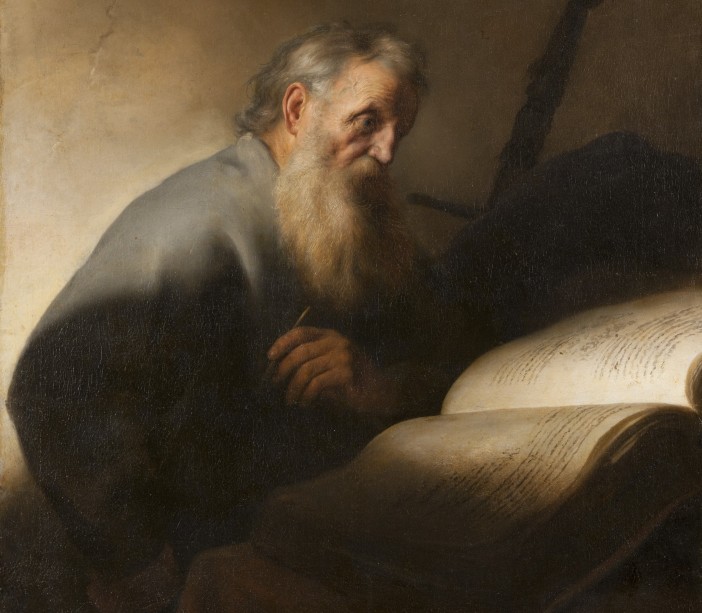
‘Five times I received at the hands of the Jews the forty lashes less one. Three times I was beaten with rods. Once I was stoned. Three times I was shipwrecked; for a night and a day I was adrift at sea; on frequent journeys, in danger from rivers, danger from robbers, danger from my own people, danger from Gentiles, danger in the city, danger in the wilderness, danger at sea, danger from false brothers; in toil and hardship, through many a sleepless night, in hunger and thirst, often without food, in cold and exposure’ (2 Corinthians 11:24–27).
Paul did not endure all this for something about which he had any doubts.
Faith
After his conversion on the Damascus road, Paul, like the other apostles, was an eyewitness of the risen, immortalized Jesus. There are no such eyewitnesses alive today, only their testimony in the Bible. But faith is, by its nature, about things we cannot witness.
‘Now faith is the assurance of things hoped for, the conviction of things not seen’ (Hebrews 11:1).
And God requires such faith:
‘Without faith it is impossible to please him, for whoever would draw near to God must believe that he exists and that he rewards those who seek him’ (Hebrews 11:6).
We are just like the disciples. Similar to Paul before his conversion, we do find it difficult to believe things that are outside our experience—like a green beetle in a child’s ear. It helps if we have some explanation about how something happened or will happen. There is no indication of how the beetle got into the child’s ear. The Bible does not tell us how God raised Jesus to life. But we must acknowledge that there are many things in life that, despite our “advanced” knowledge, we cannot fully explain. After all, we are not God, and we must remember that He is so much greater than we are.
The Bible predicts things that are outside our experience—things which might seem impossible, because we cannot work out how they will happen. God has not given us such details. These include things like the return of Jesus to the earth; the establishment of God’s Kingdom on earth; a mass resurrection; and people living for ever. But given the passionate preaching of the apostles we need a very good reason to reject any of these messages.
And if we believe their seemingly incredible testimony, we must find out what God asks of us. And then to try to obey Him.
Anna Hart