


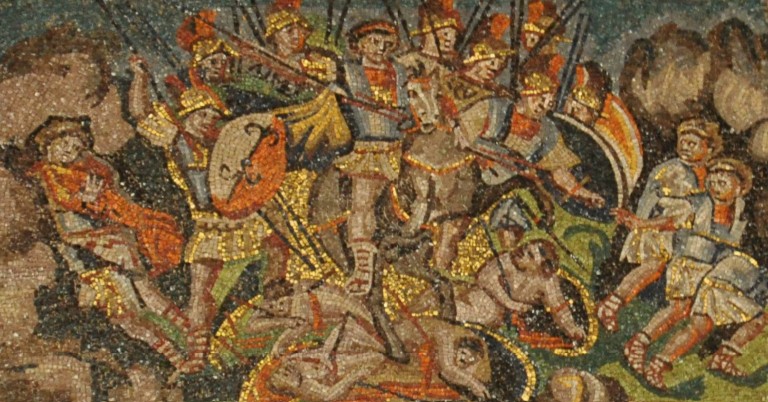
Followers of Christ are commanded to live peacefully. They are servants of the ‘God of love and peace’ (2 Corinthians 13:11). Is there a conflict between this principle, and the fact that there are occasions when God instructed soldiers to slaughter the inhabitants of various towns, sometimes resulting in whole nations being wiped out? This article explains the apparent discrepancy.
God Does Not Change
It is sometimes suggested that the God of the Bible’s Old Testament displays a different character from the God of the New Testament. It’s important to understand at the outset that God has not changed over the millennia. God Himself declared, ‘I the LORD do not change’ (Malachi 3:6), something echoed in the New Testament when we’re told that with God ‘there is no variation’ (James 1:17). The God of the Old Testament is therefore also the God of the New.
If we study the two testaments in more detail, we quickly see that God’s immense love is not restricted to the New Testament, nor are His severe punishments restricted to the Old. For example, in the Letter to the Romans, our attention is drawn to both sides of His character when we are warned to ‘note the kindness and severity of God’ (Romans 11:22). In the Old Testament book of Psalms, we frequently find God described as a God of mercy. Psalm 136 is notable in the way it stresses this, with a chant of ‘his steadfast love endures for ever’ concluding every verse. Another Psalm that refers to God’s love is Psalm 103:
‘The steadfast love of the LORD is from everlasting to everlasting on those who fear him, and his righteousness to children’s children, to those who keep his covenant and remember to do his commandments’ (Psalm 103:17–18).
What’s important about this verse is the condition that God has placed on His love: it is showered upon those who try to follow His commands, but it is not an unconditional love. And here we see the key to this topic.
The Difference Between the Testaments

We can conclude from the above that God has not changed between the two testaments. What differs is not God’s character, but where the writing places its focus. In the Old Testament, an emphasis is placed on how God was teaching the nation of Israel to be the kind of people He wanted. One part of doing that was to provide laws that, if followed, would lead them to be a loving and caring people. Another part was to prepare an area of land for them to settle in, that could become a suitable environment for them to grow into the type of nation He wanted.
In the New Testament, the focus is shifted. Although many references to Jesus can be found in prophecies throughout the Old Testament, it is only when we get to the New Testament that the light shines more explicitly on his life and work. Its emphasis is on how our association with Jesus’ sacrifice is our way to become the kind of person God wants.
So, while the two testaments are strongly tied together by common themes that continually run between them, where they place their strongest focus is different. That’s the main reason why we see more of God’s severe nature in the Old Testament than we do in the New, even though God is unchanged from Genesis to Revelation.
God’s Severity in the Old Testament
As explained above, a key Old Testament theme is how God was preparing an area in which the people He was nurturing could develop the characteristics He required. For the land to be condusive for that, it was important that it provided an environment free from things that might tempt them to drift away from God and do things that were wrong. The native people of the land of Canaan were just such a threat. In God’s eyes, they were a wicked people, and if His nation lived among them, those people would continually tempt Israel to be unfaithful. Just prior to God leading His people into the land He had chosen for them, He therefore said this:

“I will set your border from the Red Sea to the Sea of the Philistines, and from the wilderness to the Euphrates, for I will give the inhabitants of the land into your hand, and you shall drive them out before you. You shall make no covenant with them and their gods. They shall not dwell in your land, lest they make you sin against me; for if you serve their gods, it will surely be a snare to you” (Exodus 23:31–33).
Note the reason God said the inhabitants were to be driven out: to prevent them from leading His people astray. Later, when God’s people were poised to cross the River Jordan and move into the Promised Land, the same message was reiterated:
“Know therefore today that he who goes over before you as a consuming fire is the LORD your God. He will destroy them and subdue them before you. So you shall drive them out and make them perish quickly, as the LORD has promised you. Do not say in your heart, after the LORD your God has thrust them out before you, ‘It is because of my righteousness that the LORD has brought me in to possess this land,’ whereas it is because of the wickedness of these nations that the LORD is driving them out before you. Not because of your righteousness or the uprightness of your heart are you going in to possess their land, but because of the wickedness of these nations the LORD your God is driving them out from before you, and that he may confirm the word that the LORD swore to your fathers, to Abraham, to Isaac, and to Jacob” (Deuteronomy 9:3–5).
Those passages stress that the inhabitants of the land God had chosen were to be destroyed, not on a whim, but because their behaviour and way of life were abhorrent to God. Joshua and his soldiers fought those people because of God’s direct command, and God’s judgements are perfect and righteous (Psalm 119:137, Revelation 16:7).
The Amalekites
Forty years earlier, when the Israelites left Egypt after their period of slavery and walked across the desert towards the land God had chosen, a nation called the Amalekites attacked them without provocation. This led to a battle with much bloodshed, but the people led by Moses won with God’s help (Exodus 17:8–13). The way the Amalekites had acted displeased God to such an extent that, afterwards, He instructed the leaders of His people to eradicate them.
“Thus says the LORD of hosts, ‘I have noted what Amalek did to Israel in opposing them on the way when they came up out of Egypt. Now go and strike Amalek and devote to destruction all that they have. Do not spare them, but kill both man and woman, child and infant, ox and sheep, camel and donkey’” (1 Samuel 15:2–3).
God’s judgements may appear stern to us, but He hates evil behaviour (Psalm 11:5). That side of His nature is not unique to the times of Joshua and the early kings but is also clearly seen in warnings we find in the New Testament. It is evident in some of Jesus’ parables (for example Matthew 3:10–12; 13:42) and, more explicitly, in some of the New Testament letters (for example Romans 2:8–9; 2 Thessalonians 1:8; Hebrews 10:30–31, 12:29).
God’s Patient Nature

However, it’s very important to realise that God is also very patient with humanity, giving us every opportunity to turn away from the kinds of behaviour that He abhors. Consider the time of Noah, another example of humanity’s behaviour becoming so bad that God had to intervene. In the time of Noah, the state of the world is summed up in this way:
‘The earth was corrupt in God’s sight, and the earth was filled with violence. And God saw the earth, and behold, it was corrupt, for all flesh had corrupted their way on the earth. And God said to Noah, “I have determined to make an end of all flesh, for the earth is filled with violence through them. Behold, I will destroy them with the earth”’ (Genesis 6:11–13).
However, even in this momentous judgment, we still see God’s patience and desire that people would repent and turn from their evil behaviour. The New Testament reflects on what happened in this way: ‘they
formerly did not obey, when God’s patience waited in the days of Noah, while the ark was being prepared, in which a few, that is, eight persons, were brought safely through water’ (1 Peter 3:20).
Note how God’s patience and longsuffering is described in that verse. Peter later described Noah as ‘a herald of righteousness’ (2 Peter 2:5), so it seems Noah tried to convince those around him to repent while he was building the ark. God waited patiently during that time, hoping others would turn to Him; unfortunately, they chose not to and paid the ultimate penalty.
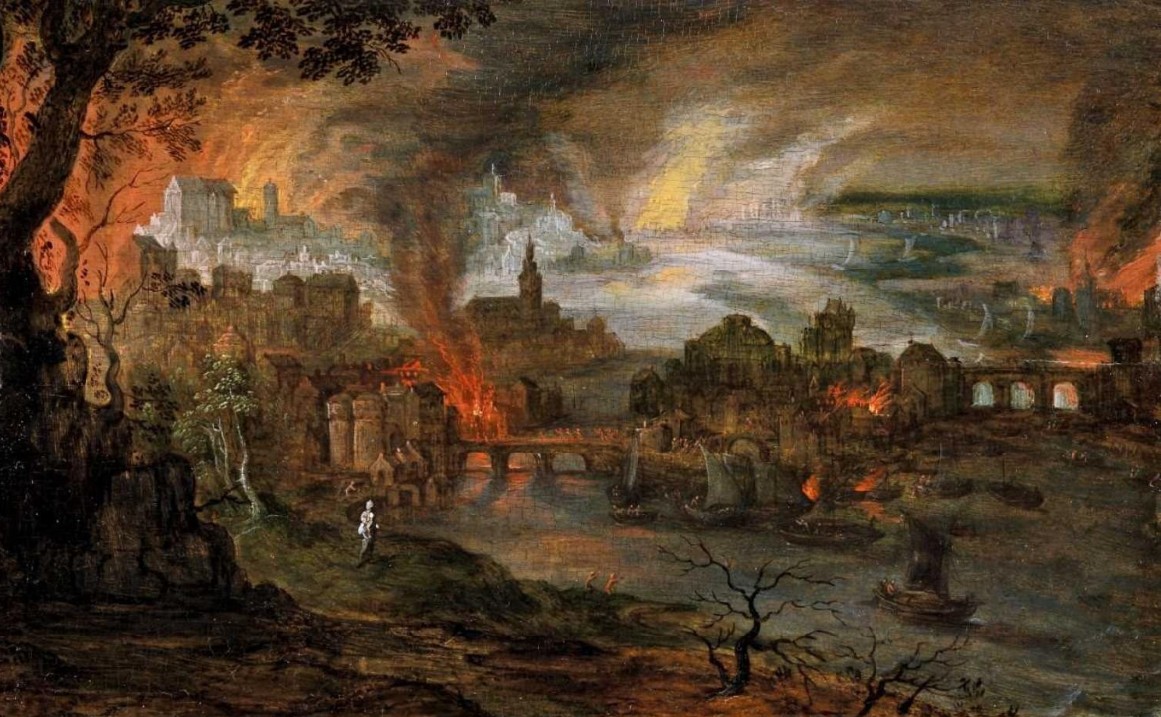
Similarly, the behaviour of the inhabitants of Sodom and Gomorrah distressed God so much that He sent angels to totally destroy them. However, because a man called Lot was there, who is referred to in the New Testament as ‘righteous’ (2 Peter 2:7), the angels were instructed not to destroy the towns until he was clear of the area (Genesis 19:22). Lot tried to convince his sons in law to leave Sodom before God destroyed it, but they just laughed at him and ignored the warning (Genesis 19:14); they died as a result.
The picture we see is of a God who is very patient, holding off punishment as long as He can in order to give people the opportunity to be saved. The Apostle Peter wrote, ‘The Lord is not slow to fulfil his promise as some count slowness, but is patient towards you, not wishing that any should perish, but that all should reach repentance’ (2 Peter 3:9). Similarly, in the Old Testament, God described Himself as ‘merciful and gracious, slow to anger, and abounding in steadfast love and faithfulness’ (Exodus 34:6).
A Warning for Today
However, just because God has a longsuffering and merciful nature, that doesn’t mean we can live our lives in any way we please. We must ensure God doesn’t consider us in the same way He viewed the people whom Joshua was instructed to eradicate.
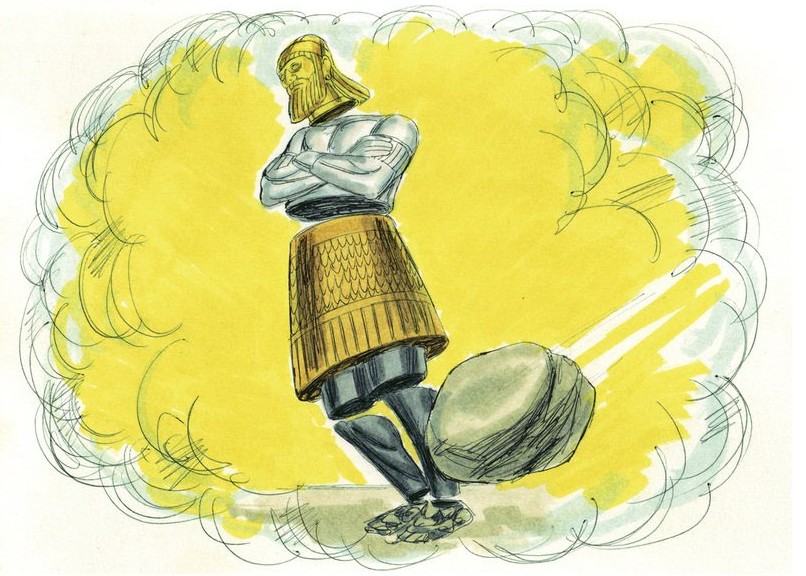
The Bible teaches that Jesus Christ will return to earth to establish God’s Kingdom. The Old Testament prophet Daniel likened Jesus’ second coming to a stone smashing the world’s nations and then filling the earth (Daniel 2:44). That illustrated how Jesus will prepare the whole earth for God’s Kingdom on his return, not just the small area of land that God prepared for the nation of Israel in the Old Testament. Jesus warned that those who do not turn to him risk being wiped out at that point (Matthew 13:40–43; 25:31–41), like the people of Noah’s time (Luke 17:26–27) or like the inhabitants of the land in Joshua’s day. The apostle Paul sounded this warning:
‘Do you presume on the riches of his kindness and forbearance and patience, not knowing that God’s kindness is meant to lead you to repentance? But because of your hard and impenitent heart you are storing up wrath for yourself on the day of wrath when God’s righteous judgement will be revealed. He will render to each one according to his works: to those who by patience in well-doing seek for glory and honour and immortality, he will give eternal life; but for those who are self-seeking and do not obey the truth, but obey unrighteousness, there will be wrath and fury’ (Romans 2:4–8).
Let us respond to this warning by turning to God now while He is allowing us the time. The Bible shows us what He wants us to do with our lives, and the marvellous future that is in store for those who love and obey Him.
Ian Coates