


IN THE BEGINNING CONTINUED: PART 23
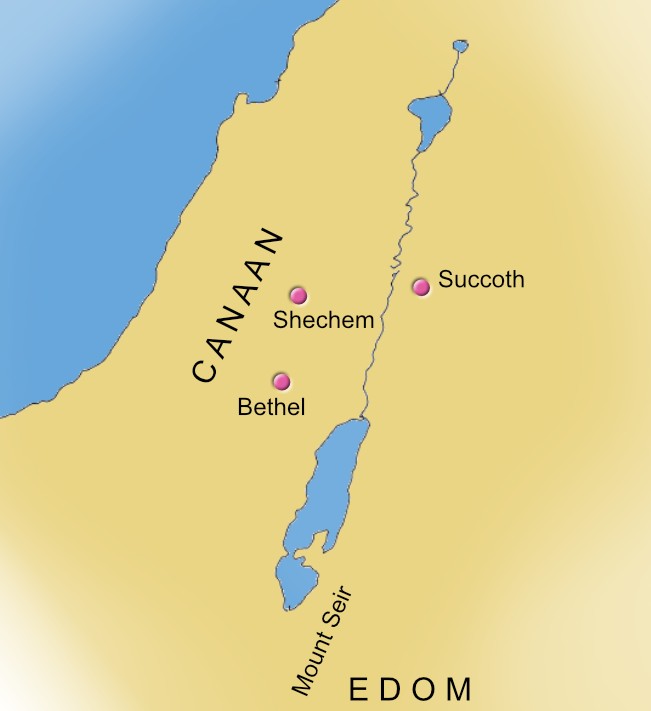
Jacob was immensely relieved to see Esau departing to his base at Mount Seir, south of the Dead Sea. Even though the present he had given his brother had cost him dearly, he felt it was a small sacrifice to be rid of his company. Furthermore, he had no intention of following Esau home, in spite of his brother’s polite invitation. Instead, he stopped at Succoth, east of Jordan, built himself a house, and settled there with his flocks.
It sounds perfectly natural for Jacob to want to build a house on his return to Canaan. A close follower of these studies, however, might raise an eyebrow at this detail (recorded in Genesis 33:17). Abraham and Isaac, Jacob’s forefathers, had been careful only to live in tents. They were waiting for God, in His good time, to give them the land of Canaan for an everlasting possession (Hebrews 11:8–10). As sojourners and pilgrims, they would not force God’s hand by presuming to settle down in a permanent dwelling. Perhaps Jacob was shaken by his recent adventures, and felt the need of four solid walls. His proper destination was Bethel, where he had an appointment with God to repay the vow made there 21 years before when he first left home. But Succoth seemed safer, and he stopped there for a long while.
At Shechem
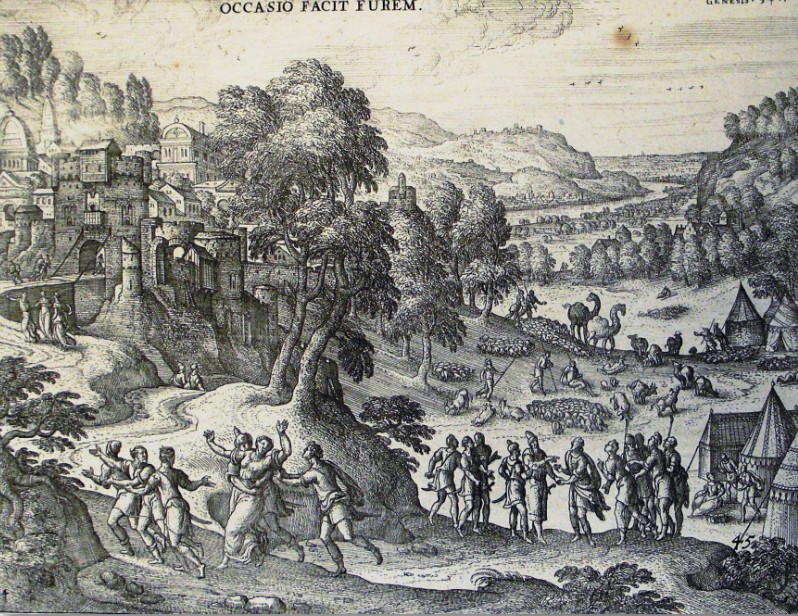
When eventually he did move on, it was across the Jordan westwards to Shechem, where he pitched outside a prosperous city of the Canaanites. Again, this seems to have been a mistake. If he craved human company, the Canaanites were not the best friends to cultivate. Before long, Jacob’s daughter Dinah was abducted by a young nobleman from the city, and when two of his sons rescued her by trickery and murder, Jacob found himself forced to flee for fear of reprisals (Genesis 34).
Could it be that God was moving him on? So often in the Bible a change of circumstances swings a person round in their tracks. Saul went looking for his father’s lost asses, ended up in the presence of the prophet Samuel, and found himself anointed king (1 Samuel 9). Joseph, abandoned by his brothers to die in a pit in the wilderness, was hauled out again and sold to a caravan of merchantmen who happened to pass by at the critical moment, thus preserving his life (Genesis 37). Paul, visiting Jerusalem to hand over a collection of money for the poor Christians in Judea, found himself arrested, and spent the next five years or so in prison, giving him opportunity to write his finest epistles (Acts 21).
We are told in Psalm 34 that ‘The angel of the LORD encamps round those who fear him, and delivers them’ (v. 7). The writer to the Hebrews adds that the angels are ‘ministering spirits sent out to serve for the sake of those who are to inherit salvation’ (1:14). One of the greatest comforts for disciples of the Lord is the knowledge that, all unseen, the angels are watching over their lives, arranging events for their good. If the hand of the Lord sometimes deflects us from an evil path back into the right way by just such a painful situation as that which brought Jacob once more on the pilgrim road to Bethel, we can be thankful.
Taking Stock
Jacob seems to have felt the need himself for a spiritual overhaul at this time. Before leaving Shechem for Bethel, he gathered his household together, and commanded them to hand over all the heathen idols they had acquired during the last years. ‘So they gave to Jacob all the foreign gods that they had, and the rings that were in their ears. Jacob hid them under the terebinth tree that was near Shechem’ (Genesis 35:4). They then purified themselves, and put on a change of clothes (v. 2). So cleansed, they felt prepared to go to worship the great God who had befriended them so well.
This little episode is instructive. There are periods in the disciple’s life when they need to take stock of progress. They can accumulate idols almost without realising it—that is, objects or habits insignificant by themselves and yet which in combination weigh down and crowd out the service of God, like a fruit tree overgrown with a tangle of criss-crossing branches. At such times drastic pruning is called for—a ruthless purging in the home and the diary of those things which they know in their heart are wrong. They need to look themselves squarely in the mirror, and ask whether they are ready to meet God. Christ could come any day!
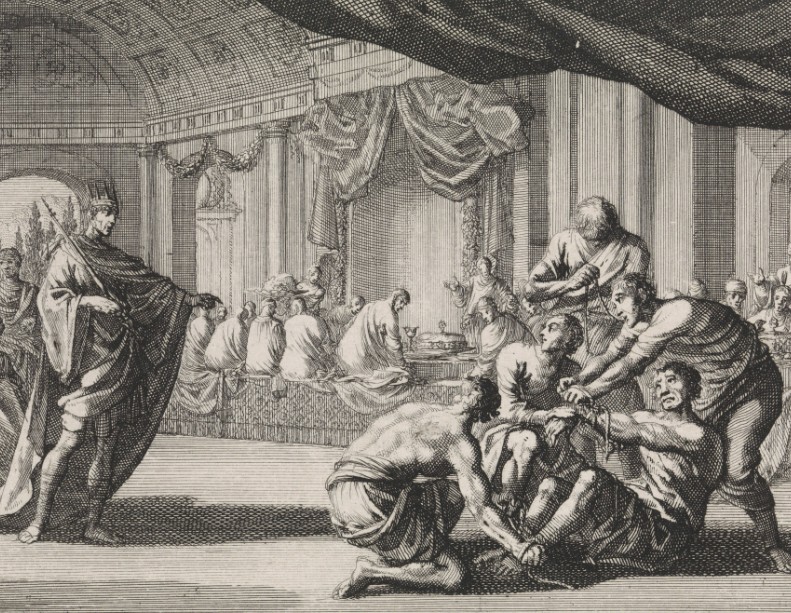
Jesus makes this point himself, in one of his more pointed parables. A man came to a wedding feast who had not bothered to put on the clean white robe provided for the guests. Perhaps he thought his ordinary clothes were good enough. He had made no effort to get ready. “But when the king came in to look at the guests, he saw there a man who had no wedding garment. And he said to him, ‘Friend, how did you get in here without a wedding garment?’ And he was speechless. Then the king said to the attendants, ‘Bind him hand and foot and cast him into the outer darkness. In that place there will be weeping and gnashing of teeth’” (Matthew 22:11–13).
If you, reader, have done nothing to make ready for the Kingdom of God, there is still time to cleanse your life. Since the time of Christ, the waters of baptism have been the appointed way in which we can wash away our sins, and put on the clean white robe of the name of Christ (Romans 6). And even if we are a seasoned disciple who long ago fulfilled this command, we sometimes need to haul the boat out of the water and scrape off the worldly barnacles that hinder our progress, before it is too late.
Back to Bethel
Jacob journeyed southwards and eastwards through the land of the Canaanites, thrilled, no doubt, by the green, terraced vineyards and olive groves, the clean outline of the mountains and the shimmering purple of the Dead Sea, reflecting the distant hills of Moab. These views he would remember from his younger days, and gratitude would fill his heart. He came to Bethel, from whence he had departed alone in weariness and fear over 20 years before (Genesis 28:10–22). God had promised him at that time, “I am with you and will keep you wherever you go, and will bring you back to this land” (v. 15). Now Jacob had become a great company, with wives, children, servants, herds and flocks, and his life had been preserved. He built an altar, pouring out his thanks, and set up a pillar at the same spot where he had once slept exhausted with a stone for a pillow (35:7).
To his great joy, the angel of God appeared again, repeating the Abrahamic promise of a numerous seed and the possession of the land, and confirming his new name, “Israel”, a prince with God (vs. 9–15). Jacob’s cup was full to overflowing, and his faith had never been so strong.
(to be continued)
DAVID PEARCE