


‘I am God, and there is no other; I am God, and there is none like me, declaring the end from the beginning and from ancient times things not yet done’ (Isaiah 46:9–10).
God can do this. People try, but with very much less success. Throughout history there have been people who have claimed to have divine knowledge of the future, and some have made some impressive predictions. What I’d like to do is to look at some of these predictions, and look at some techniques that they use, then compare these predictions with one of the Bible’s prophecies. What I think we’ll see is that there is actually no comparison—the Bible shows itself to be what it claims to be, the Word of the Eternal God, and it stands completely apart from even the most ingenious human creations.
The Vague Prediction
One technique that people often use when telling the future is to be deliberately ambiguous, in order to maximise their chance of their prediction coming true, whatever the outcome. (Horoscope writers often use this technique.)
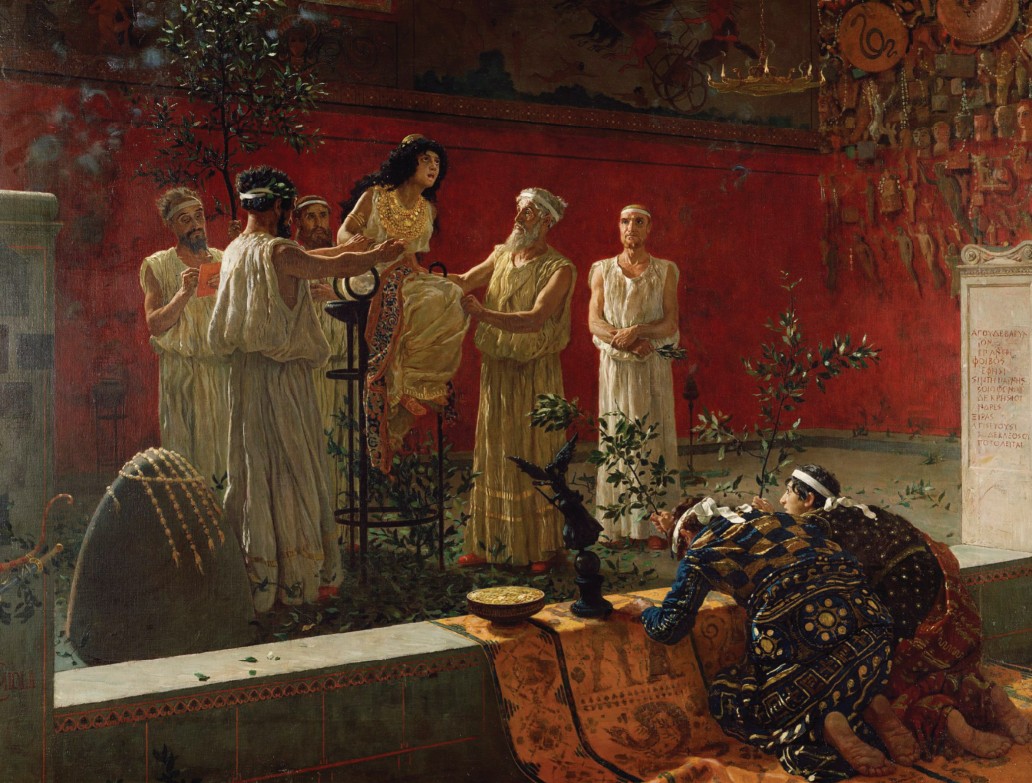
The Delphic Oracle was perhaps the most famous future-teller of the ancient world. People from far and wide came to consult the Oracle at the Temple of Apollo at Delphi in Greece.
Around 550 bc, King Croesus of Lydia came to ask the Oracle whether he should go to war against the rising power of Persia. The Oracle replied, “If Croesus goes to war, he will destroy a mighty empire.”
Encouraged by this, Croesus attacked the Persians, who roundly defeated him. When he complained to the Oracle, she replied that she’d been right—she just hadn’t specified which empire would be destroyed.
The Scattergun Approach
Another technique is to produce lots of predictions, in order to maximise the chances of at least some of them proving right.
Michel de Notredame is better known by his Latin name Nostradamus. Astrology was popular in 16th Century France, and he found he had a knack for it. He achieved fame when the French Queen Catherine de Medici declared that Nostradamus had accurately predicted the death of her husband King Henri II.
Nostradamus’s prophecies generally take the form of four-line verses, called “quatrains”. This is one of the most famous:
‘At night they will think that they have seen the sun when they see the pig-like halfman.
Noise, shouts, battles seen in the heavens: Brute beasts will be heard speaking.’
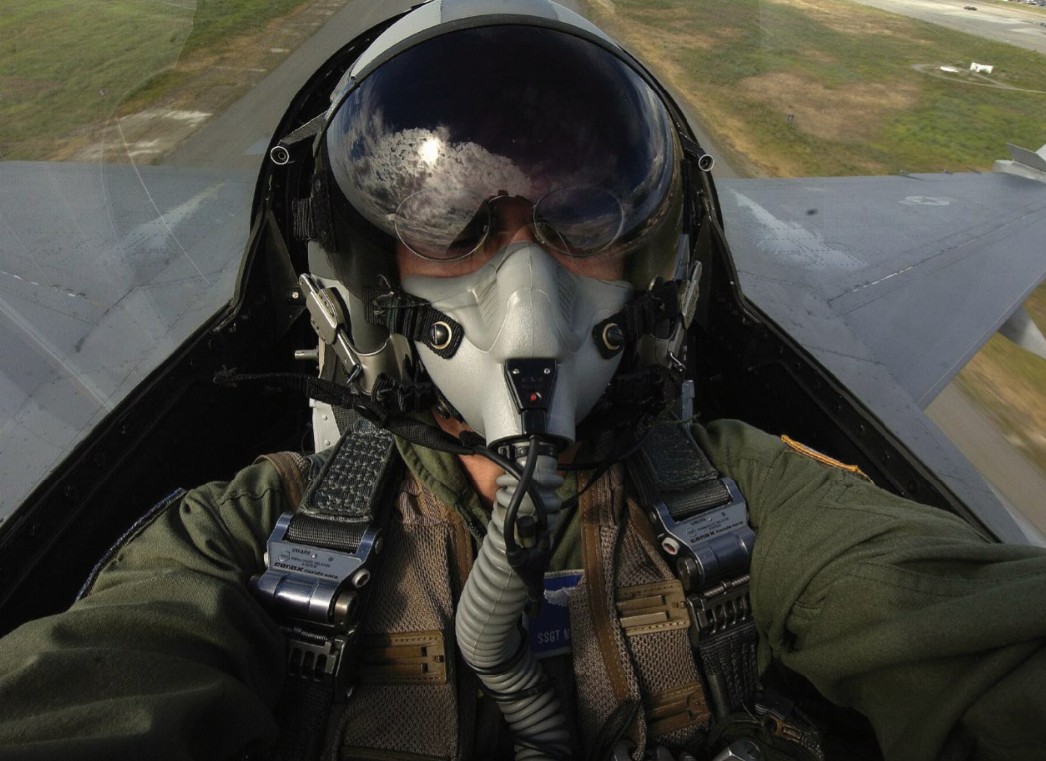
This sounds like an uncannily prescient description of aerial warfare —over four centuries before aircraft were invented! The sun at night is flashlights and anti-aircraft missiles; the pig-like half-man is a pilot wearing a helmet and oxygen mask, and the brute beasts heard speaking is the garbled sounds of pilots talking over their radios.
It seems very impressive, until you remember that Nostradamus wrote around 1200 quatrains, and the vast majority of them make no sense at all. The law of probability dictates that if you make enough predictions, you’re bound to get lucky with one or two.
The Likely Outcome
Many prophecies can be identified as simply perceptive predictions based on evidence.
For example, Joseph Smith is regarded as a prophet by members of the Church of Jesus Christ of Latter Day Saints (often known as the Mormons). Perhaps his most famous prophecy is his prediction of the American Civil War, which is contained in the Doctrine and Covenants section 87. It reads:
‘Verily, thus saith the Lord concerning the wars that will shortly come to pass, beginning at the rebellion of South Carolina, which will eventually terminate in the death and misery of many souls; And the time will come that war will be poured out upon all nations, beginning at this place. For behold, the Southern States shall be divided against the Northern States…’
This prophecy was written in 1832. In 1861, 28 years later, the American Civil War began with an attack on Fort Sumter in South Carolina.
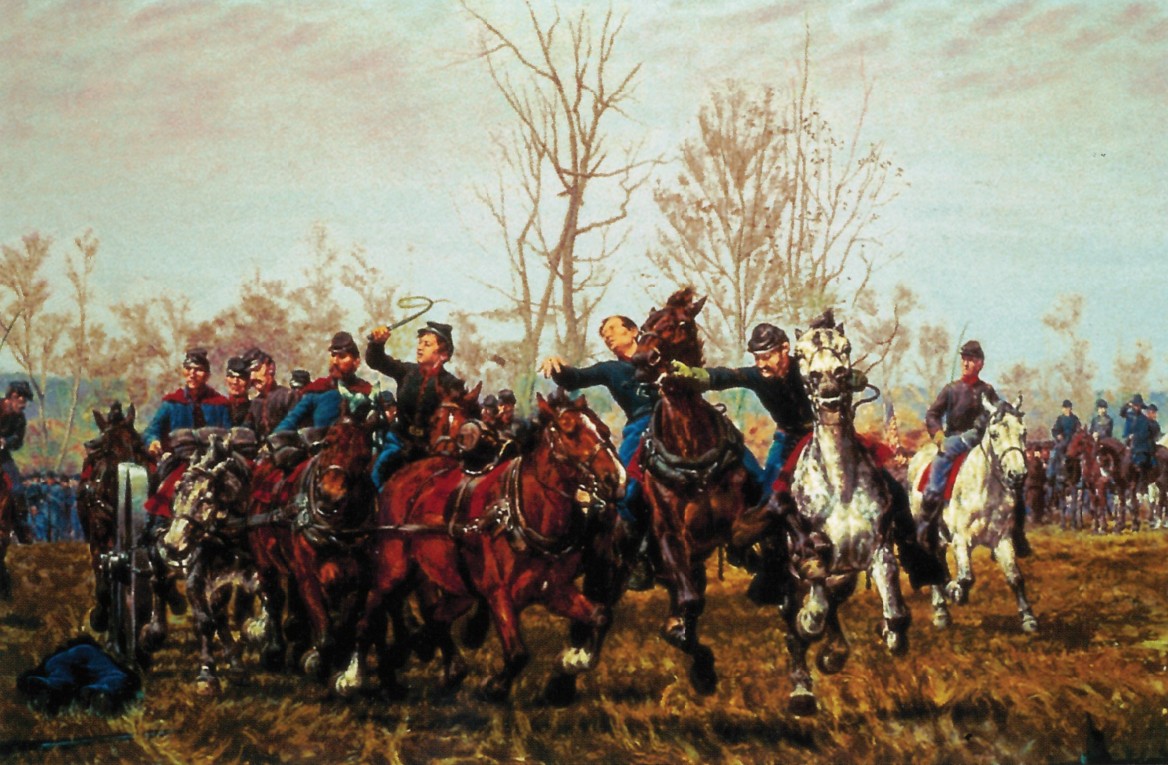
Again, this sounds impressive, until you consider the context. At the time Smith wrote the prophecy, the American states were in turmoil. South Carolina was involved in the “Nullification Crisis”, in which it had rebelled against tariffs imposed by the Federal government. Many Americans at that time, including political commentators and newspaper editors, were discussing the very real possibility of a civil war starting in South Carolina. The question arises, was Smith’s prophecy divine revelation or simply a bold forecast?
Bible Prophecy
The Bible claims to be the Word of God (2 Timothy 3:16). God is eternal, and knows everything (1 John 3:20). A large proportion of the Bible’s message is concerned with foretelling the future.* Its prophecies are often precise and detailed. Many of them can be identified as having been fulfilled, years after they were delivered. Excitingly, some of them are obviously still in our future. Let’s look at just one prophecy, which I think is one of the most remarkable.
The Israelite prophet Ezekiel had been taken captive in one of the Babylonian invasions of Israel under King Nebuchadnezzar. He foretold the final overthrow of the Israelite kingdom and the destruction of Jerusalem (Ezekiel 21), which happened in 586 bc.
If you have a Bible, take a look at chapter 26. If not, you can find one online.
This is a prophecy which was delivered in the ‘eleventh year’ (26:1) —that is, the eleventh year of the exile of King Jehoiakim, which is around the date of Jerusalem’s destruction. It is a condemnation of Tyre (at that time a Phoenician city, in modern Lebanon), because evidently the Tyreans were gloating over Jerusalem’s destruction, expecting that they would profit from Israel’s downfall. God declares, ‘Behold, I am against you, O Tyre, and will bring up many nations against you, as the sea brings up its waves. They shall destroy the walls of Tyre and break down her towers, and I will scrape her soil from her and make her a bare rock. She shall be in the midst of the sea a place for the spreading of nets’
(vs. 3–5).
The area of the ancient city of Tyre contains rocky plateaus which, for centuries up until modern times, were handy locations for fishermen to spread their nets to dry.
Ezekiel goes on to detail how this was to happen. Verses 7 to 11 graphically describe the attack and the 13-year siege by King Nebuchadnezzar, which resulted in the complete destruction of the old city, around 573 bc.
This was only a partial fulfilment of the prophecy. Nebuchadnezzar ransacked the city but he did not flatten it.
In verse 12 the pronouns change from ‘he’—Nebuchadnezzar—to ‘they’.
They will plunder your riches and loot your merchandise. They will break down your walls and destroy your pleasant houses. Your stones and timber and soil they will cast into the midst of the waters (v. 12).
What happened was this—during Nebuchadnezzar’s siege many of the Tyreans abandoned the mainland city and retreated to an island fortress, around three quarters of a mile offshore. Nebuchadnezzar was unable to reach them because he didn’t have a navy. So the city persisted in its new location for two and a half centuries, and it looked as though they had outsmarted Ezekiel’s prophecy.
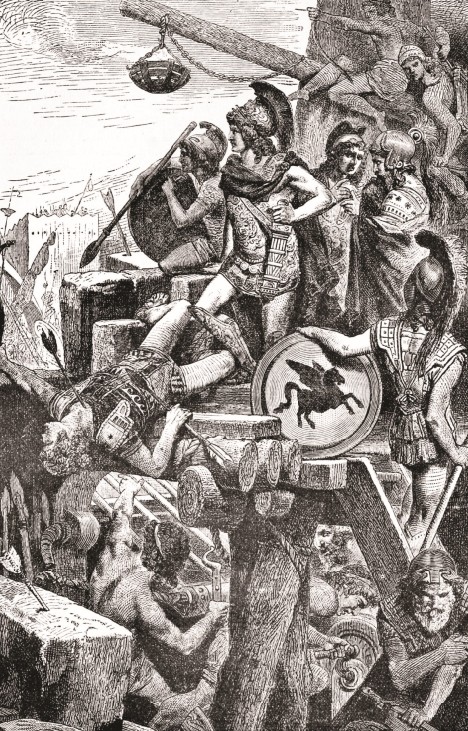
But God takes His time. Verse 12 was precisely fulfilled by Alexander the Great and his Greek army, aided by the naval forces of the Cypriots, Phoenicians and others, in 332 bc. Realising that it was not going to be possible to capture the Tyrean fortress by ships alone, the Greeks had a brilliantly simple idea—they scraped away the remains of the old city and used it to construct a gigantic causeway, connecting the mainland with the island. Then they marched across the causeway and captured the fortress.
The causeway has grown over the centuries with silt deposited by the sea. The island city is still there, but it’s now a peninsula.
The city was soon resettled by Greeks and others, and rebuilt as a Roman-style colony. There is now a bustling seaside town which covers the peninsular and stretches inland, and includes a large area of Greco-Roman remains which make it an important archaeological site.
So what of Ezekiel’s prediction that ‘I will make you a bare rock. You shall be a place for the spreading of nets. You shall never be rebuilt, for I am the Lord; I have spoken, declares the Lord God’ (v. 14)?
The answer lies in the fact that the old city was so completely destroyed that it’s not possible to be sure of its location. Maps from the 19th Century show that the city at that time was largely confined to the tip of the peninsula, where the island fortress used to be. The only other significant features were a mile south on the mainland, and surveyors believed that this was actually the site of the ancient mainland city. This area is now the Tyre Coast Nature Reserve. Ezekiel’s prophecy has been fulfilled to the last detail.
Power for Salvation
The Bible makes a bold claim about its prophecies: ‘No prophecy was ever produced by the will of man, but men spoke from God as they were carried along by the Holy Spirit’ (2 Peter 1:21). You recognise this unique character, when you read this amazing book. But the Bible is not just interesting, it’s not just a book of history and prophecy—it contains the Gospel message, which is ‘the power of God for salvation to everyone who believes’ (Romans 1:16).
DOUG POTTS