



‘Hear, O Israel: The LORD our God, the LORD is one. You shall love the LORD your God with all your heart and with all your soul and with all your might. And these words that I command you today shall be on your heart.’
(Deuteronomy 6:4–6)
Moses was the man whom God tasked with leading Israel in their remarkable escape from their slavery in Egypt, and their exceptional journey through the ‘great and terrifying wilderness’ (Deuteronomy 1:19). When he retold the story to them in the book of Deuteronomy, he introduced the “Ten Commandments” in chapter 5 by reminding them of the goodness of God, and how He revealed Himself to the nation on Mount Sinai.
The people who had witnessed this event, some 40 years before, had died in the wilderness because of their unbelief.
Covenant to be God’s People
Moses began the story in Deuteronomy by reminding the people of the covenant which God made with the nation on Mount Sinai (also called Horeb) (1:6). Exodus 19 recounts how God made that covenant with the whole nation, even with this present generation, some of whom were not even born then. The covenant was all embracing, and the response was all inclusive. He reminded them that they had been chosen specially by God—the only nation to be so chosen. The covenant was a very precious arrangement: God had chosen Israel out of all the peoples on the face of the whole earth. It arose because of love, and the oath which God had sworn to their ancestors (7:6–8).
This shows the wonder and the majesty of God; that He is kind and generous, faithful and loving. Such a mighty God expected a positive reaction, and He put before the people the Ten Commandments (Exodus 20:3–17 and Deuteronomy 5:7–21). The very first commandment was, “You shall have no other gods before me” (Exodus 20:3). It was followed by explanations and conditions (vs. 4–6), so they were clear about what was expected of them.
One of these conditions is in Deuteronomy 6:14–15. Moses explained that the gods being referred to were “the gods of the peoples who are around you”. Israel must beware of the insidious influence that the surrounding nations could have on them. It was a lesson in separation. God knew there would be no benefit in any association with the foreign nations, only a falling away. Moses warned the people of Israel that “the LORD your God in your midst is a jealous God”. This was the third time this description of God had been used (Deuteronomy 4:24, 5:9, 6:15). They would have known what the word meant, but its connection with God was new: especially when coupled with “lest the anger of the LORD your God be kindled against you, and he destroy you from off the face of the earth” (v. 15). This was a severe warning against idolatry and unfaithfulness, which could only lead to unbelief and the loss of their inheritance in the Promised Land.
The Golden Calf
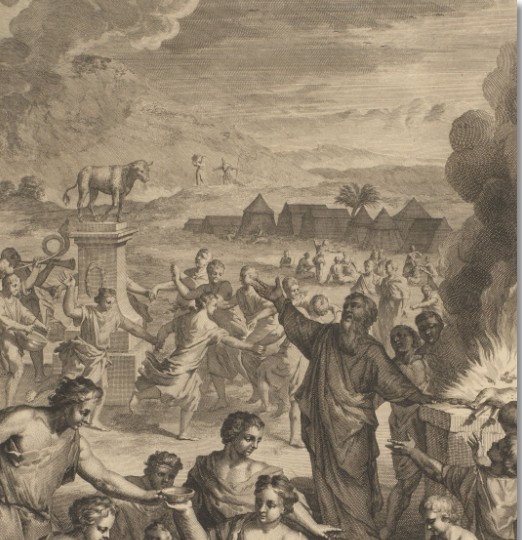
Sadly, and in a graphic description in Exodus 32, during a 40-day period when Moses was on Mount Sinai receiving the Law from God, the people engaged in idolatrous worship. They had doubts about the whereabouts and welfare of Moses because he had been gone for a long time, and they persuaded Aaron the High Priest to build them a god. They willingly gave their gold jewellery, and Aaron moulded a golden calf. When they saw it they proclaimed, “These are your gods, O Israel, who brought you up out of the land of Egypt!” (v. 4). Their blasphemous and degrading worship is described: ‘The people sat down to eat and drink and rose up to play’ (v. 6).
God told Moses, “Go down, for your people, whom you brought up out of the land of Egypt, have corrupted themselves. They have turned aside quickly out of the way that I commanded them” (vs. 7–8). Such was God’s anger that He was ready to destroy them. He did not, because Moses pleaded with Him for their forgiveness on the grounds of the oaths He swore to Abraham, Isaac and Jacob. This was a hard reality check for the people, and an example of what would happen if the nation adopted false gods and idolatry as their standard practice.
A Jealous God
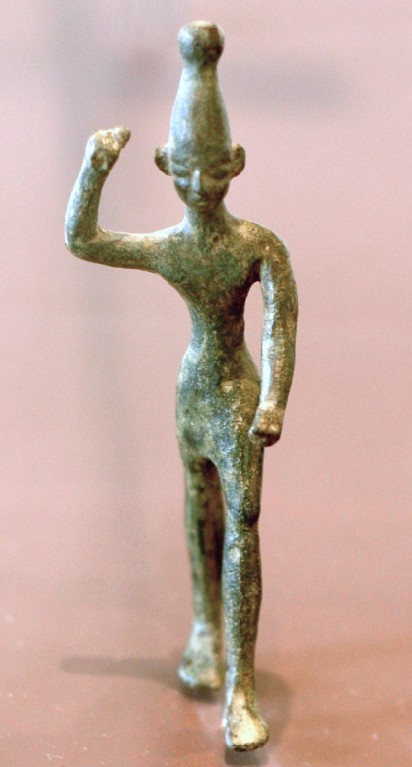
In Exodus 34:12 the command to avoid false gods is extended. God said, “Take care, lest you make a covenant with the inhabitants of the land to which you go, lest it become a snare in your midst”. And He
added, “You shall tear down their altars and break their pillars and cut down their Asherim” (v. 13). This was part of the task of conquering the indigenous nations. “For you shall worship no other god, for the LORD, whose name is Jealous, is a jealous God” (v. 14). God regarded His people as holy and sanctified, and in a precious covenant relationship with Him. This was reinforcing the importance of physical and spiritual separation. God knew the wickedness that would follow if they adopted the customs and intermarried with the nations around them.
Deuteronomy 5:7–9 also expanded the prohibitions stated by the first commandment. When the people were in Egypt they acquired many skills. Sadly they used these skills to make idols, which they worshipped (see Exodus 32:4–5, 24; Amos 5:25–26; Acts 7:40–43). This kind of behaviour was highly displeasing to God and some of the people were judged to the point of death. God specifically forbade making or forming or building any kind of image, or figure, or likeness to anything that was in either heaven, or earth, or even in the waters of the seas and rivers. Why? Because God is a jealous God, and in order to demonstrate His uniqueness He judged and punished those who breached this second commandment.
God was to be the sole object of the people’s worship and affections. He would not be compromised or shared with false gods, which could not speak, or see, or hear, or smell, or handle, or walk (Psalm 115:4–7). Perhaps more importantly, God’s covenant with His people meant that He had a long term purpose with them. They were His witnesses (Isaiah 43:10). They were to glorify Him by their everyday lives and behaviour.
VIC AUCOTT
(to be continued)