


There is one other incident in the relatively uneventful life of Isaac that deserves attention. This one, too, shows how harmoniously the Bible’s Old and New Testaments blend in their teaching. Isaac, as we saw in a previous article, was a shepherd and cattle rancher like his father Abraham. As his flocks and herds increased, he had to spread out over more and more of the countryside to feed them. This annoyed the Philistines, for he was a foreigner, and they resented his prosperity. When they asked him, not too politely, to move on, he took his family back to the Valley of Gerar (Genesis 26:14–17).
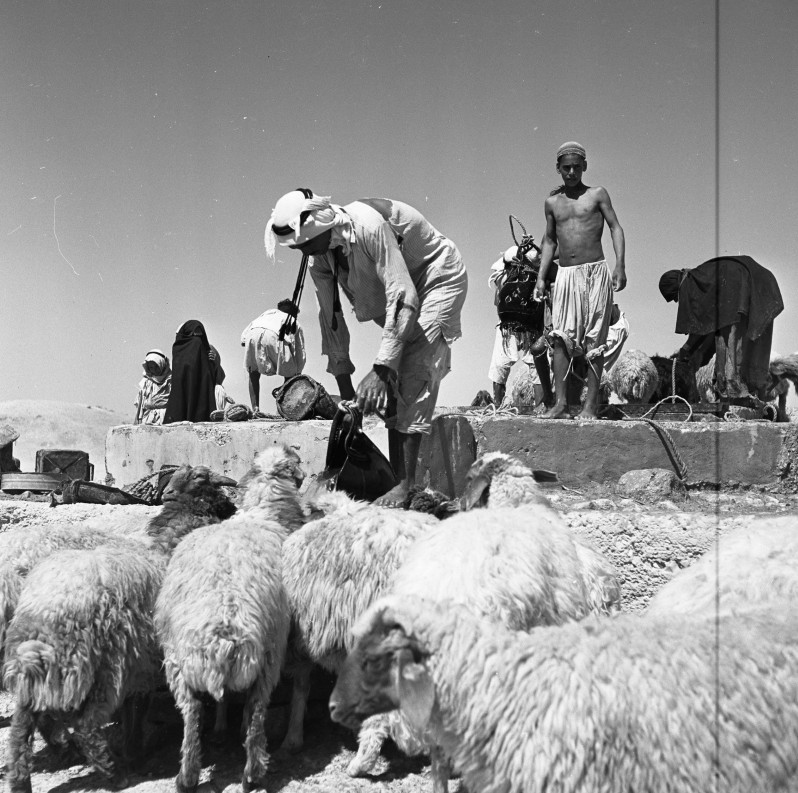
A first priority for sheep farming in Israel is to secure a water supply. In damper climates sheep can obtain enough moisture from the grass they eat not to need drinking water, but in Israel’s climate the ‘still waters’ (Psalm 23:2) were essential for life. Isaac’s servants therefore chose in the valley a likely site for a well, dug down, and were rewarded by finding running water, the best type of water source. However, before they could exploit their find, the local Philistine shepherds appeared in force and insisted that, because they had always grazed the area, the water belonged to them. A fierce quarrel developed.
Isaac decided to stop the argument by instructing his men to dig another well. After the hard work of boring the first one, they were probably not too pleased, but they did as they were told. When the sweet, bubbling fluid again appeared, Isaac thought his troubles were over. But once again the native herdsmen appeared and staked their claim. It reads as though they were prompted more by envy or that natural mistrust we all have for strangers, than by a real need for water, for presumably they could have dug wells themselves with the same success.
Fighting for your Rights
You might expect Isaac to resort to force to establish his right to the well which his men had so laboriously dug. After all, his livelihood depended on the vital water. It is an expensive business, digging a well. Often it takes two or three false attempts digging down into the strata before a good fast supply is tapped, and wells in the plain of the Philistines can be very deep. There is one at Gaza, only a few miles from where Isaac lived, that goes down 160 feet (50 metres). Pride and a sense of grievance would have justified Isaac protecting his precious investment in man-hours with the sword. Instead, he moved on and dug another well, all over again (Genesis 26:22).
At first sight, you might think Isaac was a spineless individual, unwilling to stick up for his rights. But shedding blood to preserve our interests is actually easier than swallowing our pride and moving on. The Law of Moses prescribed ‘eye for eye, tooth for tooth’ (Exodus 21:24) as punishment for certain crimes, and this is often misapplied to justify retaliation in kind when someone suffers hurt. Yet Jesus sets forward a better way, and that is the one Isaac took.
You have heard that it was said, ‘An eye for an eye and a tooth for a tooth. ’ But I say to you, do not resist the one who is evil. But if anyone slaps you on the right cheek, turn to him the other also. And if anyone would sue you and take your tunic, let him have your cloak as well (Matthew 5:38–40).
Insisting on our rights may give us some personal satisfaction, but it does not help the one who treats us badly to find God. ‘Love your enemies and pray for those who persecute you,’ Jesus concluded (v. 44). This approach views an enemy as a human soul in need of redemption, and seeks God’s compassion so that they may be saved. This is a plain teaching of Jesus which is all too often ignored. How often do we read of someone pursuing their revenge through various courts of appeal, and spending a fortune on lawyers’ fees, just to better their opponent or clear their name! Yet the Apostle Paul is emphatic that the disciple of Christ has no place seeking their revenge in a court of law. Rather, he suggests, we should suffer wrong, and allow ourselves to be defrauded.
Never avenge yourselves, but leave it to the wrath of God, for it is written, ‘Vengeance is mine, I will repay, says the Lord.’ To the contrary, ‘if your enemy is hungry, feed him; if he is thirsty, give him something to drink; for by so doing you will heap burning coals on his head.’ Do not be overcome by evil, but overcome evil with good (Romans 12:19–21).
Submit to God
God gives us all that we have. When we submit to evil in the right spirit, He is able to prosper us above what we lose, both in this life (as the book of Job illustrates well) and even more in the world to come. If by our returning good for evil our enemy’s conscience is smitten and they repent, to deliver a person from eternal death is worth more than anything we give up in the process. Paul the Apostle eventually died as a prisoner, worn out, scarred and penniless because of the hatred of his enemies, but he still felt his life had been worthwhile. His attitude was that of Isaac, and Christ.
I try to please everyone in everything I do, not seeking my own advantage, but that of many, that they may be saved (1 Corinthians 10:33).
David Pearce
(to be continued)